Mortgage and Home Loans November 11, 2020

Making a Home for the Brave Possible

[et_pb_section admin_label=”section”]
[et_pb_row admin_label=”row”]
[et_pb_column type=”4_4″][et_pb_text admin_label=”Text”]

Making a Home for the Brave Possible [INFOGRAPHIC] | MyKCM

Some Highlights from Making a Home for the Brave Possible:

  • VA Home Loans provide unique opportunities for Veterans, active-duty personnel, and their families in recognition of their service to our Nation.
  • For eligible individuals, options associated with VA Loans can help make the dream of homeownership a reality.
  • If you or someone you know may benefit from a VA Loan, let’s connect to answer your questions today.

If you’re ready to move, connect with one of our sales agents.

 [/et_pb_text][/et_pb_column]
[/et_pb_row]
[/et_pb_section]

Agency News and Awards November 10, 2020

Congrats to Tom Folino For Reaching the Cap!

Congratulations From Geoffrey Green, President Of Green Team Realty, To Tom Folino for reaching the commission cap for Company Dollar Contribution in 2020!

A few words from Geoff about Tom reaching cap:

“Coach Tom, as I call him, is a great guy.  I am confident that anyone who knows him would say the same exact thing. Tom goes way back here in the Warwick Community with many people including myself.  (He was my quarterback coach in High School) Tom has taken his career in Real Estate very seriously and has learned the ins and outs in rapid fashion. Couple that with such a well-known figure and you have the perfect recipe for success.  Tom is now officially a top producer in our marketplace and he will be here to stay.  Big congrats Coach!”

Tom’s dedication to his clients and hard work has allowed him to reach the cap on his commission with Green Team Realty. This is an outstanding accomplishment and means Tom will now receive a 100% commission split on any deal he closes during 2020.

Tom’s thoughts on hitting the cap:

Tom Folino- Final Web File“Reaching the cap is something all agents should be very proud of. In this business, it’s all about getting the job done for your clients while making the process as enjoyable and stress free as possible for them. When you “cap out” it gives you a sense of accomplishment and is a reward for all of the hard work and commitment you have given to the process and more importantly to your clients. I greatly appreciate all of the people I have met and had the honor to work with to help me reach this goal, without my clients none of this would be possible.

The commission plan that Geoff Green has implemented for the Green Team Realty gives you the incentive and motivation to work hard and then ultimately rewards all of that hard work. For me, I believe that reaching the cap was made possible because Geoff gives his agents all of the tools necessary to be successful in this profession. Everything is literally at our fingertips.”


Green Team Realty’s commission structure is, no doubt, one of the finest in the industry, but it doesn’t end there.  Our lead generation platform, certified sales assistant program, and dynamic training systems are just a few other things worth mentioning. 

To learn more about Green Team Realty and why you should join our team click here.

Congratulations, Tom!

Selling a Home November 7, 2020

Should I Renovate My House Before I Sell It?

Should I Renovate My House Before I Sell It? [INFOGRAPHIC] | MyKCM

Some Highlights from Should I Renovate My House Before I Sell It?

  • In today’s hyper-competitive market, buyers are often willing to overlook cosmetic or minor repair needs if it means snagging a home in their price range.
  • With so few houses available for sale today, you may be able to skip the bigger renovations before you sell and cash in on the current demand for your house.

If you’re ready to move, connect with one of our sales agents.

See 2020 Home Avg. Renovation Costs

Buying a home November 4, 2020

Rent vs. Buy: How to Decide What’s Best for You


According to the U.S. Census Bureau, median rent continues to rise. With today’s low mortgage rates, there’s great opportunity for current renters to make a move into homeownership that stretches each dollar a little bit further.

While the best timeline to buy a home is different for everyone, the question remains: Should I continue renting or is it time for me to buy? The answer depends on your current situation and your future plans, so here are some thoughts to help you decide if you’re ready to own a home of your own.

1. Rent Will Continue to Increase

This is one of the top reasons why renters decide to move because in most cases, rent will continue increasing each year. As noted above, the U.S. Census Bureau recently released its quarterly homeownership report, and as the graph below shows, median rent is climbing year after year. When you own a home, you’ll lock in your monthly payment for the life of your loan, creating consistency and predictability in your payments.Rent vs. Buy: How to Decide What’s Best for You | MyKCM

2. Freedom to Customize

This is a big decision-making point for many people who want to be able to paint, renovate, and make home upgrades. In many cases, landlords determine all of these selections and prefer you do not alter them as a renter. As a homeowner, you have the freedom to decorate and personalize your home to truly make it your own.

3. Privacy

When renting, your landlord has access to your space in case of an emergency. If you own your home, however, you’re the one to decide who can come inside. Given today’s health concerns around the pandemic, this may be a growing priority for you.

4. Flexibility for Relocation

If you’re renting, it may be easier to move quickly should you have a job transfer or simply decide it’s time for a change. When you’re a homeowner and need to sell your house, this might take a little more time. Today, however, with the housing market’s low inventory, this may no longer be the case. Homes are selling at a record-breaking pace, so you may have more flexibility than you think.

5. Building Equity

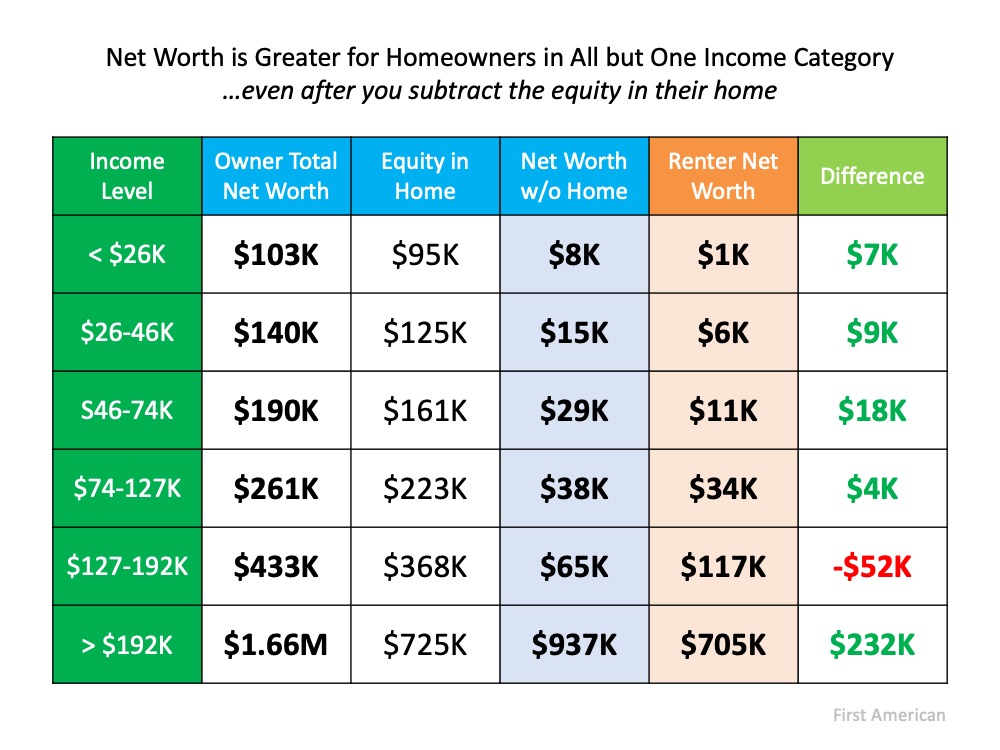
When you pay your rent, your landlord earns the equity the property gains. If you own your home, the benefits of your investment go directly toward your net worth. This is savings you’ll be able to use in the future for things like sending children to college, starting a new business, buying a bigger home, or simply downsizing to save for retirement.

6. Tax Advantages

When you own your home, there are additional advantages that work in your favor as well. You can deduct things like your property taxes and mortgage interest (Always make sure you check with your accountant to see which tax-deductible benefits apply to your situation). When you rent, however, the tax benefits are directed to your landlord.

Bottom Line

It’s up to you to decide if you’d prefer to rent or buy, and it’s different for every person. If you’d like to learn more about the pros and cons of each, as well as resources to help you along the way, let’s connect to discuss your options. This way, you can make a confident and informed decision with a trusted expert on your side.

Agency News and Awards November 3, 2020

Welcome James “Jimmy” Cosenza


The Green Team is proud to announce that James “Jimmy” Cosenza has decided to join our Warwick, NY office. We’re excited to have him on our team and look forward to helping him grow!

Please join us in Welcoming James to The Green Team New York!

To learn more about James and his business visit his website here.

Housing Market News October 29, 2020

Expect a Rebound Next Year – Single-Family Housing Market

[et_pb_section fb_built=”1″ _builder_version=”3.0.47″ custom_padding=”16px|0px|0px|0px|false|false”][et_pb_row _builder_version=”3.0.48″ background_size=”initial” background_position=”top_left” background_repeat=”repeat”][et_pb_column type=”4_4″ _builder_version=”3.0.47″ parallax=”off” parallax_method=”on”][et_pb_text _builder_version=”3.0.74″ background_size=”initial” background_position=”top_left” background_repeat=”repeat”]

Real estate market conditions and values holding up much better than predicted six months ago says Urban Land Institute

Real estate market conditions and values in the U.S. are expected to rebound in 2021 and trend even higher in 2022, with single-family homes outperforming other sectors such as commercial, retail, hotel and rentals, according to a report released by the Urban Land Institute on October 22.

New single-family construction starts will fall slightly to 871,250 in 2020 before rising to 940,000 in 2021 and 975,000 in 2022, the highest level since 2006, according to the Urban Land Institute, a Washington, D.C.-based nonprofit that promotes sustainable community development throughout the country.

In the meantime, home prices will grow an average of 4.1% over the next three years, above the long-term average of 3.9%, according to the report, based on a survey of 43 economists at 37 leading real estate organizations.

“The worst fears of earlier this year have mostly eased,” William Maher, principal of Maher Strategies and author of the report said. While uncertainties, related to the coronavirus pandemic and the presidential election, remain, “as of now, leading real estate economists are signaling that resilience and underlying strength will likely win out over uncertainty and risk,” he said.

Read “Home Builder Confidence Hits All-Time Record”

The Urban Land Institute conducts semi-annual surveys—one in the spring and one in the fall—on real estate and macroeconomic fundamentals.

The economists had expected the U.S. GDP would decline 6% in 2020 in the spring survey, but now adjusted the forecast to a 5% decline. However, they lowered their estimate of the economic growth rate of 2021 to 3.6%, from 3.9% forecasted six months earlier.

Other real estate sectors will lag behind single-family housing in the coming two years but will hold up much better than economists had expected in the spring.

Commercial real estate price growth, measured by the Moody’s RCA Commercial Property Price Index (CPPI), is expected to fall 2% in 2020 rather than a projected 7% decline in May. The index is expected to flatline in 2021.

Retail vacancy, meanwhile, is expected to be 11.3% in 2021 and 2022, up from the 10.6% in 2020 and above the 20-year average of 9.7%. Office vacancy rates are expected to rise to 14.8% in 2022, above the 20-year average of 14%, according to economists’ forecast.
[/et_pb_text][/et_pb_column][/et_pb_row][et_pb_row _builder_version=”3.18.2″][et_pb_column type=”4_4″ _builder_version=”3.18.2″ parallax=”off” parallax_method=”on”][et_pb_post_nav in_same_term=”off” _builder_version=”3.18.2″ title_font=”|800|||||||” title_text_color=”#ffffff” title_font_size=”15px” background_color=”#007a42″ border_radii=”on|2px|2px|2px|2px” border_width_all=”2px” border_color_all=”#007a42″ custom_padding=”1px|4px|1px|4px”][/et_pb_post_nav][/et_pb_column][/et_pb_row][et_pb_row _builder_version=”3.18.2″][et_pb_column type=”4_4″ _builder_version=”3.18.2″ parallax=”off” parallax_method=”on”][et_pb_text _builder_version=”3.18.2″ text_font=”||||||||” text_font_size=”12px”]

BY FANG BLOCK  |  ORIGINALLY PUBLISHED ON OCTOBER 28, 2020  |  MANSION GLOBAL

[/et_pb_text][/et_pb_column][/et_pb_row][/et_pb_section]

Housing Market NewsMortgage and Home Loans October 29, 2020

Why Today’s Options Will Save Homeowners from Foreclosure

Many housing experts originally voiced concern that the mortgage forbearance program (which allows families impacted financially by COVID to delay mortgage payments to a later date) could lead to an increase in foreclosures when forbearances end.

Some originally forecasted that up to 30% of homeowners would choose to enter forbearance. Less than 10% actually did, and that percentage has been dropping steadily. Black Knight recently reported that the national forbearance rate has decreased to 5.6%, with active forbearances falling below 3 million for the first time since mid-April.

Many of those still in forbearance are actually making timely payments. Christopher Maloney of Bloomberg Wealthrecently explained:

“Almost one quarter of all homeowners who have demanded forbearance are still current on their mortgages…according to the latest MBA data.”

However, since over two million homeowners are still in forbearance, some experts are concerned that this might lead to another wave of foreclosures like we saw a little over a decade ago during the Great Recession. Here is why this time is different.

There Will Be Very Few Strategic Defaults

During the housing crash twelve years ago, many homeowners owned a house that was worth less than the mortgage they had on that home (called negative equity or being underwater). Many decided they would just stop making their payments and walk away from the house, which then resulted in the bank foreclosing on the property. These foreclosures were known as strategic defaults. Today, the vast majority of homeowners have significant equity in their homes. This dramatically decreases the possibility of strategic defaults.

Aspen Grove Solutions, a business consulting firm, recently addressed the issue in a study titled Creating Positive Forbearance Outcomes:

“Unlike in 2008, strategic defaults have not emerged as a serious problem and seems unlikely to emerge given stronger expectations for property price increases, a record low inventory of homes, and stable residential underwriting standards leading up to the crisis which has reduced the number of owners who are underwater.”

There Are Other Options That Were Not Available the Last Time

A decade ago, there wasn’t a forbearance option, and most banks did not put in other programs, like modifications and short sales, until very late in the crisis.

Today, homeowners have several options because banks understand the three fundamental differences in today’s real estate market as compared to 2008:

1. Most homeowners have substantial equity in their homes.

2. The real estate market has a shortage of listings for sale. In 2008, homes for sale flooded the market.

3. Prices are appreciating. In 2008, prices were depreciating dramatically.

These differences allow banks to feel comfortable giving options to homeowners when exiting forbearance. Aspen Grove broke down some of these options in the study mentioned above:

  • Refinance Repay: Capitalize forbearance amount – For borrowers who have strong credit, have good or improved equity in their homes, possibly had a higher interest rate on their original loan, have steady employment/no significant wage loss, and income.
  • Repayment Plan: Pay it back in higher monthly payments – For people who cannot reinstate using savings, but have increased monthly income, and do not want to use a deferral program.
  • Deferral Program: Shift payments to the end of the loan term – For borrowers who lost income temporarily and regained most or all of their income but are not in a position to refinance due to credit score, home equity, low total loan value relative to closing costs, or simple apathy.
  • Modification: Flex modification or other mod – For households that permanently lost 20% to 30% of their income, but not all of their income, and want to remain in their home.

Each one of these programs enables the homeowner to remain in the home.

What about Those Who Don’t Qualify for These Programs?

Homeowners who can’t catch up on past payments and don’t qualify for the programs mentioned have two options: sell the house or let it go to foreclosure. Some experts think most will be forced to take the foreclosure route. However, an examination of the data shows that probably won’t be the case.

A decade ago, homeowners had very little equity in their homes. Therefore, selling was not an option unless they were willing to tap into limited savings to cover the cost of selling, like real estate commission, closing costs, and attorney fees. Without any other option, many just decided to stay in the house until they were served a foreclosure notice.

As mentioned above, today is different. Most homeowners now have a large amount of equity in their homes. They will most likely decide to sell their home and take that equity rather than wait for the bank to foreclose.

In a separate report, Black Knight highlighted this issue:

“In total, an estimated 172K loans are in forbearance, have missed three or more payments under their plans and have less than 10% equity in their homes.”

In other words, of the millions currently in a forbearance plan, there are few that likely will become a foreclosure.

Bottom Line

Some analysts are talking about future foreclosures reaching 500,000 to over 1 million. With the options today’s homeowners have, that doesn’t seem likely.

Mortgage and Home Loans October 29, 2020

Do You Need to Know More about Forbearance and Mortgage Relief Options?

Earlier this year when the nation pressed pause on the economy and unemployment rates jumped up significantly, many homeowners were immediately concerned about being able to pay their mortgages, and understandably so. To assist in this challenging time, two protection plans were put into place to help support those in need.

First, there was a pause placed on initiating foreclosures for government-backed loans. This plan started on March 18, 2020, and it extends at least through December 31, 2020. Second, homeowners were able to obtain forbearance for up to 180 days, followed by a potential extension for up to another 180 days. This way, there is a relief period in which homeowners have the opportunity to halt payments on their mortgages for up to one year.

Not Everyone Understands Their Options

The challenge, according to Matt Hulstein, Staff Attorney at non-profit Chicago Volunteer Legal Services, is, “A lot of homeowners aren’t aware of this option.”

There’s definitely traction behind this statement. In a recent survey by The National Housing Resource Center, housing counselors from across the country noted that many homeowners really don’t know that there is help available. The following graph indicates the reasons why people who are in this challenging situation are not choosing to enter forbearance:Do You Need to Know More about Forbearance and Mortgage Relief Options? | MyKCMThe Urban Institute explained:

“530,000 homeowners who became delinquent after the pandemic began did not take advantage of forbearance, despite being eligible to ask for the plan…These responses reflect a need to provide better information to all homeowners. (Lump-sum payment is not the only repayment option.)

Additionally, 205,000 homeowners who did not extend their forbearance after its term ended in June or July became delinquent on their loans. We need to examine who these people are and why are they not extending their option.”

Clearly, a more focused effort on education about forbearance and relief programs may make a big difference for many people, and a clear understanding of their options is mission-critical. Some communities, however, have been impacted by the economic challenges of the pandemic more so than others, further confirming the need to deliver education more widely. The Urban Institute also indicates:

“Black and Hispanic homeowners have been hit harder than white homeowners…nearly 21 percent of both Black and Hispanic homeowners missed or deferred the previous month’s mortgage payment, compared with 10 percent of white homeowners and about 13 percent of all homeowners with payments due.”

Options Available

It’s important to note that any homeowner experiencing financial hardship has the right to request forbearance. If you’re unfamiliar with the plans available, contact your mortgage provider (the company you send your mortgage payment to each month) to discuss your options. It is a necessary next step, as you may qualify for mortgage relief options or forbearance.

One option many homeowners may not realize they have is the ability to sell their house in this time of need. With the growing equity that homeowners have available today, making a move might be the best option to protect your financial future.

Bottom Line

If you need additional information on your options, you can review the Protect Your Investment guide from the National Association of Realtors (NAR) and the Homeowner’s Guide to Success from the Consumer Financial Protection Bureau (CFPB). For the majority of people, our home is the most important asset we have, and you should use all the help available right now to be able to preserve your investment.

Housing Market News October 27, 2020

October 2020 Housing Market Update

Geoff Geen, President of Green Team Realty, welcomed everyone to the October 2020 Housing Market Update. The webinar, held on Tuesday, October 20 at 2 p.m. examined the housing market on both national and local levels.

If you missed the webinar or would like to view it again, it’s available here.

Meet the Panel

October Housing Market Update panelists were Nancy Sardo, and Tammy Scotto of Green Team New York Realty, and Keren Gonen of Green Team New Jersey Realty. Also joining the discussion was Ken Aulicino, Mortgage Loan Originator at Family First Funding.

Can the housing market recovery be sustained?

The U.S housing market has been a “V-shaped” Recovery. However, inventory continues to decline and is a big challenge. So, can the housing market keep it up?

Pros

US Consumer Spending is almost in a V-shaped recovery. Unemployment has been coming down the last 6 to 7 months. The number of mortgages in active forbearance is decreasing. Prior to the Great Recession, it was a buyers market, due to the number of homes on the market. In the early 2000s, there was also a lot of new construction happening. Now, we are firmly in a sellers’ market. There are just not enough homes to satisfy the needs of the current market.

Housing Market Oct 2020

Cons

The shortage of inventory remains a major issue. According to Realtor.com,

“Since the beginning of the COVID pandemic in March, nearly 400,000 few homes have been listed compared to last year, leaving a gaping hole in the U.S. housing inventory…

As a result, home prices are accelerating at double last year’s pace.”

According to the National Association of Realtors, Existing Home Sales are up by 10.5%. However, listings are down 39%. Listings for New Homes are down by 31%. However, sales of new homes have increased by 43%.

This really shows the inventory story.

Green Team Realty Oct Housing Market Update

Local Stats

In Orange County, NY, there are increases in units sold and in average sales price. Sussex County, NJ is now showing strong increases in average sales price, as well as in units sold.

Learn More, Watch the Webinar

Watch Geoff’s full presentation on national and local economic and real estate trends. In addition, our expert panel discusses their experiences in this market, including new construction. Click here to view the webinar.

Furthermore, you can compare prior statistics and trends. Click here for the September 2020 Housing Market Update.

“Housekeeping” Items

Green Team Realty Oct 2020 Housing Market Update

Contact our Panelists

Green Team Realty Oct 2020 HMU Contact Info

Join us on Tuesday, November 17 at 2 p.m.

Sign up for updates now at GreenTeamRealty.com/HMU

Agency News and Awards October 26, 2020

Congrats To Carol Buchanan For Reaching The Cap!

Carol Buchanan reached the cap!

Congratulations from Geoffrey Green, President of Green Team Realty, to Carol Buchanan for reaching the commission cap for company dollar contribution in 2020!

A quote from Geoff:

“It’s no wonder why Carol Buchanan is so successful.  When you dutifully service your clients with honesty, responsiveness, good advice, and caring you are successful in this industry.  That is how Carol Buchanan gets it done.  She is a true professional, and we are extremely blessed to have Carol as part of our Agency.”

Carol’s dedication to her clients and hard work has allowed her to reach the cap on her commission with Green Team Realty. This is an outstanding accomplishment and means Carol will now receive a 100% commission split on any deal she closes during 2020.

Carol’s Thoughts:

Carol Buchanan


“Making my CAP is a big deal. This is something I’ve never done before so I’m very proud to have achieved this with Green Team NY Realty. I’m grateful to my clients that have allowed me to work with them especially during this Pandemic, it’s been a different experience but being able to continue working for them was most important to me. The support and tools available to me through the Green Team along with my hard work and diligence has certainly helped to get me to this point. Thank you Geoff Green and Green Team New York Realty!”


Green Team Realty’s commission structure is, no doubt, one of the finest in the industry, but it doesn’t end there.  Our lead generation platform, certified sales assistant program, and dynamic training systems are just a few other things worth mentioning. 

To learn more about Green Team Realty and why you should join our team click here.

Congratulations, Carol!