Mortgage rates are hovering near record lows, and that’s good news for today’s homebuyers. The graph below shows mortgage rates dating back to 2016 and where today falls by comparison.Generally speaking, when rates are low, you can afford more home for your money. That’s why experts across the industry agree – today’s low rates present buyers with an incredible opportunity. Here’s what they have to say:
Sam Khater, Chief Economist at Freddie Mac, points out the historic nature of today’s rates:
“As the economy works to get back to its pre-pandemic self, and the fight against COVID-19 variants unfolds, owners and buyers continue to benefit from some of the lowest mortgage rates of all-time.”
Mark Fleming, Chief Economist at First American, talks about how rates impact a buyer’s bottom line:
“Mortgage rates are generally the same across the country, so a decline in mortgage rates boosts affordability equally in each market.”
Danielle Hale, Chief Economist at realtor.com, also notes the significance of today’s low rates and urges buyers to carefully consider their timing:
“Those who haven’t yet taken advantage of low rates to buy a home or refinance still have the opportunity to do so this summer.”
Hale goes on to say that buyers who don’t act soon could see higher rates in the coming months, negatively impacting their purchasing power:
“We expect mortgage rates to fluctuate near historic lows through the summer before beginning to climb this fall.”
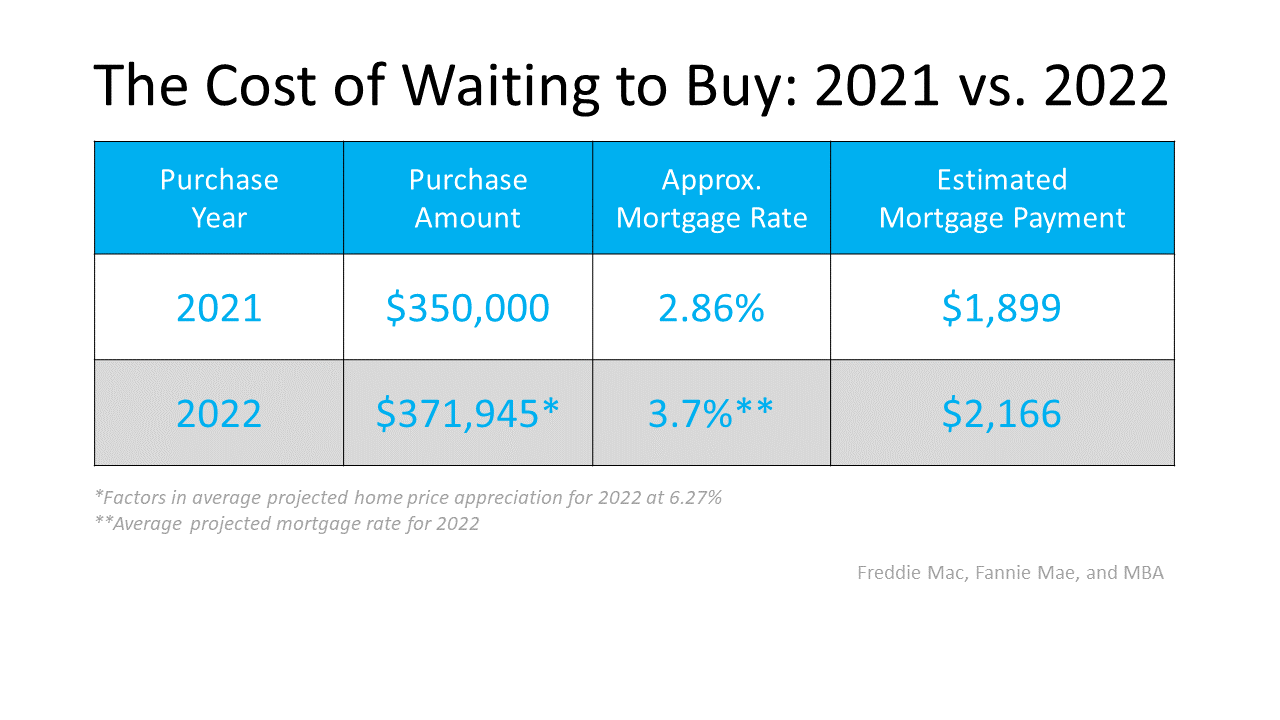
And while mortgage rates are still low today, the data from Freddie Mac indicates rates are fluctuating ever so slightly right now, as they moved up one week before inching slightly back down in their latest release. It’s important to keep in mind the influence rates have on your monthly mortgage payment.
Even small increases can have a big impact on what you pay each month. Trust the experts. Today’s rates give you opportunity and flexibility in what you can afford. Don’t wait on the sidelines and hope for a better rate to come along; the rates we’re seeing today are worth capitalizing on.
Bottom Line
Mortgage rates hover near record lows today, but experts forecast they’ll rise in the coming months. Waiting could prove costly when that happens. Let’s connect today to discuss today’s rates and determine if now’s the time for you to buy.
Maybe with the leverage you currently have, you can negotiate a deal that will allow you to make the move of your dreams. What’s your home’s value?
The August 2021 Housing Market Update, hosted by Geoff Green, was held on August 7 at 12 p.m. One focus of the webinar was the possibility of a housing bust, with the market imploding. The overall consensus is that it is not going to happen. Geoff presented several reasons why it won’t, including this quote from Dr. Frank Nothaft, Chief Economist at CoreLogic:
“There are marked differences in today’s run-up in prices compared to 2005, which was a bubble fueled by risky loans and lenient underwriting. Today, loans with high-risk features are absent and mortgage underwriting is prudent.”
The entire presentation is available below if you missed the live webinar or would like to watch it again,
Forbearance
The original projection of forbearance was 30%. It has been nowhere near that. Today the actual percentage is 3.5%. The number of mortgages in active forbearance is now under 2 million.
44.1% of those in forbearance have paid in full. Another 38.7% worked out repayment plans. However, 17.2% have remained in trouble. Because of the inventory shortage, foreclosures through the forbearance program could easily be absorbed by the market.
Headlines in the news
We’re starting to see headlines in news media:
“Home sales drop in June as prices continue to rise.” CNN
“Pending home sales drop in June – more evidence of a housing turnaround.” CNBC”
“The Housing Boom is officially over.” YahooFinance
However…
According to the ShowingTime Index, in June there was more showing traffic than at any time in 2020.
While the fever pitch of the market is fading, the market is still extremely strong. The sellers’ market does not appear to be ending any time soon. And, the main reason? Lack of inventory. However, sellers must be careful in how they price their homes. According to Lawrence Yun, Chief Economist, NAR,
“… given that the sales activities are coming down, we may be sensing some turn in the market. We are seeing less prevalence of multiple offers. It is still a seller’s market, no doubt… Still a seller’s market, but people need to be very cautious how they price their home to attract buyers. knowing that these sales activities are declining somewhat.”
National Stats
Year-over-year existing home sale numbers are similar to those of past years. However, the average home sale price is much higher than any year since 2017. Months supply of inventory is still extremely low. There are many people who bought homes during the pandemic and have since been called back to work in cities. Some of them may find the commute too difficult and put those homes on the market.
“Housekeeping” Details
Meet our panel:
Two very experienced realtors joined Geoff Green for the panel discussion. Keren Gonen, Green Team New Jersey Realty. operates in the New York metro area, North Jersey. Realtor Pete Galyon, United Real Estate Experts, is based in Chattanooga, Tennessee. They discussed the softening of the market and a return to “normalcy.” They also discussed the importance of using an experienced local realtor for both buyers and sellers.
To view the entire presentation and panel discussion, click here.
There’s a common misconception that younger generations aren’t interested in homeownership. Many people point to the fact that millennials put off purchasing their first home as a reason for this belief.
Odeta Kushi, Deputy Chief Economist for First American, explains why millennials have put off certain milestones linked to homeownership. Those delays led to their homeownership rates trailing slightly behind older generations:
“Historically, millennials have delayed the critical lifestyle choices oftenlinked to buying a first home, including getting married and having children, in order to further their education. This is clear in cross-generational comparisons of homeownership rates which show millennials lagging their generational predecessors.”
So, it’s partially true that some millennials have waited onhomeownership to focus on other things in their lives – and that’s impacting certain housing market trends.
Data from the National Association of Realtors (NAR) indicates the average age of a first-time homebuyer is higher today than it’s been over the past 40 years. As the graph below shows, homebuyers today are purchasing their first home an average of4 years later than people in the 1980s and early 1990s:But just because millennials are hitting certain milestones later in life doesn’t mean they’re not interested in becoming homeowners. The recent U.S. Census reveals a significant increase in homeownership rates for millennials and other young homebuyers.As the graph above shows, millennials are entering the market in full force, and their share of the market is growing. Based on the data, the belief that younger generations don’t want to buy homes is a misconception. In fact, the recent Capital Market Outlook report from Merrill-Lynch further drives home this point, as it specifically mentions the effect millennials are having on demand:
“Demand is very strong because the biggest demographic cohort in history is moving through the household-formation and peak home-buying stages of its life cycle.”
Kushi is following the trend of millennial homeownership and puts it more simply, saying:
“. . . it’s clear that younger households (millennials!) are driving homeownership growth.”
As the largest generation, millennials’ impact on the market is growing as more and more people from that generation reach homebuying age – and Generation Z isn’t far behind, either. That means younger generations will likely continue to drive demand in the housing market for years to come.
Bottom Line
If you’re a member of a younger generation and interested in purchasing a home, you’re not alone. Many of your peers are on their path to homeownership, too. Let’s connect today and discuss what you can do to accomplish your homebuying goals.
The Green Team 2021 Summer Social was about more than getting together and having a good time. It was also about having fun with a purpose. For many, this occasion marked the first time they had been able to socialize in a long time. There was a lot to talk about and catch up on. Therefore, Green Team Sales Associates, their families, and invited guests enjoyed a beautiful day together at lovely Spring Brook Farm in Warwick. Of course, the food was great! Furthermore, there was even a signature green cocktail. And, many stayed to watch the magnificent sunset and enjoy smores at the firepit. However, the occasion also included fun for an important purpose, and Green Teamers came through for a special cause…
Team Up for Hope
Team Up for Hope, a non-profit organization founded by Geoff Green and Amy Green, was that cause. Its goal is to address the challenges of mental health, drug use, and suicide in our communities. This all-volunteer organization is currently made up of a small group of Green Team Sales Associates and Staffers. And, to raise money for TUH, Keren Gonen and Tiffany Megna manned the t-shirt table. Furthermore, they sold tickets for a 50/50 raffle, However, one of the main draws of the day was Dunking Geoff. Yes, the president of Green Team Realty and founder of Team Up for Hope, volunteered to get dunked! A donation of $10 got you three throws. Finally, at the end of the day, Geoff had been dunked several times, and the Green Team 2021 Summer Social raised $740 for Team Up for Hope.
Keren Gonen and Tiffany Megna at the Team Up for Hope table
Pip Klein is first up to Dunk Geoff
NAMI
Team Up for Hope provides donations to NAMI (National Alliance on Mental Illness) local chapters in Orange and Sussex Counties. NAMI, an all-volunteer organization, provides peer support, education, and resources to individuals and families whose lives are impacted by mental health diagnoses. TUH makes donations to other local non-profit organizations that share their time and knowledge to help meet the challenges of mental health, drug use, and suicide.
We were honored to have Dhanu Sannesy, President of NAMI Orange, and Mary Anne McInerney, President of NAMI Sussex in attendance. Dhanu addressed the crowd. She told them how much the support that Team Up for Hope provides means to her organization. In addition, TUH produces webinars that address various aspects of mental health, drug use, and suicide. And, while many of the resources shared are for local organizations, the topics covered are global in content, touching on the very real challenges that impact individuals and families living with these challenges.
Geoff Green with Dhanu Sannesy, President of NAMI Orange
Dhanu Sannesy, Wayne Patterson, and Mary Anne McInerney
Thanks to our Sponsors
We would not be able to do events like the Green Team Summer Social without the generous support of our sponsors. They are:
One of the major questions real estate experts are asking today is whether prospective homebuyers still believe purchasing a home makes sense. Some claim rapidly rising home prices are impacting demand and, by extension, leading to the recent slowdown in sales activity.
However, demand isn’t the real issue. Instead, it’s the lack of supply (homes available for sale). An article from the Wall Street Journal shows this is true for new home construction:
“Home builders have sold more homes than they can build. Now they are limiting their sales in an effort to catch up.”
The article quotes David Auld, CEO of D.R. Horton Inc. (the largest homebuilder by volume in the United States since 2002), explaining how they don’t have enough homes for the number of buyers coming into their models:
“Through our history, to have somebody walk into our models and to tell them, ‘We don’t have a house for you to buy today’, is something that is foreign to us.”
Danielle Hale, Chief Economist for realtor.com, also explains that, in the existing home sale market, the slowdown in sales was a supply challenge, not a lack of demand. Responding to a recent uptick in listings coming to market, she notes:
“. . . if these changing inventory dynamics continue, we could see a wave of real estate activity heading into the latter part of the year.”
Again, the buyers are there. We just need houses to sell to them.
If the slowdown in sales was the result of demand waning, we would start to see home prices beginning to moderate – but this isn’t the case. As Mark Fleming, Chief Economist for First American, explains:
“There’s a lot of conversation around rising prices and falling quantity in the housing market, and there’s this concept, or this idea, that it’s a demand-side problem . . . . But, if demand were falling dramatically, we would actually see less price pressure, less home price growth.”
Instead, we’re seeing price appreciation accelerate throughout this year, as evidenced by the year-over-year percentage increases reported by CoreLogic:
January: 10%
February: 10.4%
March: 11.3%
April: 13%
May: 15.4%
June: 17.2%
(July numbers are not yet available)
There’s a shortage of listings, not buyers, and there are three very good reasons for purchasers to still be interested in buying a home this year.
1. Affordability isn’t the challenge some are claiming it to be.
Though home prices have risen dramatically over the last 18 months, mortgage rates remain near historic lows. Because of these near-record rates, monthly mortgage payments are affordable for most buyers.
While homes are less affordable than they were last year, when we adjust for inflation, we can see they’re also more affordable than they were in the 1970s, 1980s, 1990s, and much of the 2000s.
2. Owning is a better long-term decision than renting.
A recent study shows renting a home takes up a higher percentage of a household’s income than owning one. According to the analysis, here’s the percentage of income homebuyers and renters should expect to pay now versus at the end of the year.While the principal and interest of a monthly mortgage payment remain the same over the lifetime of the loan, rents increase almost every year.
3. Owners build their wealth. Renters build their landlord’s wealth.
Whether you’re a homeowner or an investor, real estate builds wealth through growing equity year-over-year. If you own, your household is gaining the benefit of that wealth accumulation. Fleming says:
“The major financial advantage of homeownership is the accumulation of equity in the form of house price appreciation . . . . We have to take into account the fact that the shelter that you’re owning is an equity-generating or wealth-generating asset.”
Odeta Kushi, Deputy Chief Economist at First American, elaborates in a recent article:
“. . . once the home is purchased, appreciation helps build equity in the home, and becomes a benefit rather than a cost. When accounting for the appreciation benefit in our rent versus own analysis, it was cheaper to own in every one of the top 50 markets, including the two most expensive rental markets, San Francisco and San Jose, Calif.”
“The median sales price of single-family existing homes rose in 99% of measured metro areas in the second quarter of 2021 compared to one year ago, with double-digit price gains in 94% of markets.”
In 94% of markets, there was a greater than 10% increase in median price. That means if you bought a $400,000 home in one of those markets, your net worth increased by at least $40,000. If you rented, the landlord was the recipient of the wealth increase.
Bottom Line
For many reasons, housing demand is still extremely strong. What we need is more supply (house listings) to meet that demand.
Congratulations From Geoffrey Green, President Of Green Team Realty, To Vikki Garbyfor reaching the commission cap for Company Dollar Contribution in 2021!
“A big congrats to Vikki once again. Vikki is one of the most consistent top producers in our Agency. It’s no surprise that she has reached the cap once again. Vikki is extremely diligent in dealing with transactions and clients. She is well known for her patient demeanor and high level of intellect. On top of it all she is a true pleasure to deal with. Vikki will be at the top of the production charts here in Orange County, NY for many years to come. Well done Vikki!”
Vikki Garby’s dedication to her clients and hard work has allowed herto reach the cap on her commission with Green Team Realty. This is an outstanding accomplishment and means Vikki Garbywill now receive a 100% commission split on any deal she closes during 2021.
Vikki’s thoughts on hitting the cap:
“Reaching the CAP at the Green Team is very rewarding. First and foremost, reaching the CAP means I have many wonderful, loyal clients who have trusted me to guide them (and their friends) through the stressful process of buying, selling or both. Many of my current clients come from previous clients. A referral is the best compliment a client can give an agent. I am so fortunate to have had my business grow over the years through personal referrals. I can never thank my clients enough for trusting me with their friends and family. Thank you for choosing me to help you through your real estate process. Your trust, confidence and loyalty is the best reward I could receive.
Reaching the CAP is also proof that hard work pays off at the Green Team! The financial benefit of the program allows agents to keep more of their hard earned money. This benefit is thanks to Geoff Green (our tireless leader, excellent listener and trusted advisor) and the amazing Green Team New York Realty administrative team! Their support and assistance is essential in keeping so many moving parts together. I am fortunate to be part of such an incredible team.
I am privileged to share this achievement with many of my peers. In the pool of capped agents, we have all endured many 7-day weeks, late calls, early texts and challenging negotiations. It also means great teamwork with colleagues throughout our industry, including my peers at other brokerages, attorneys, mortgage lenders, inspectors, appraisers, contractors, photographers and more. Having so many true professionals to work with is essential, and I thank all of the professionals in my circle for helping me serve our clients. This is not an achievement anyone can accomplish alone.”
Green Team Realty’s commission structure is, no doubt, one of the finest in the industry, but it doesn’t end there. Our lead generation platform, certified sales assistant program, and dynamic training systems are just a few other things worth mentioning.
To learn more about Green Team Realty and why you should join our team click here.
Whether or not you’ve been following the real estate industry lately, there’s a good chance you’ve heard we’re in a serious sellers’ market. But what does that really mean? And why are conditions today so good for people who want to list their house?
It starts with the number of houses available for sale. The latest Existing Home Sales Report from the National Association of Realtors (NAR) shows housing supply is still astonishingly low. Today, we have a 2.6-month supply of homes at the current sales pace. Historically, a 6-month supply is necessary for a ‘normal’ or ‘neutral’ market in which there are enough homes available for active buyers (see graph below):When the supply of houses for sale is as low as it is right now, it’s much harder for buyers to find homes to purchase. That creates increased competition among purchasers which leads to more bidding wars. And if buyers know they may be entering a bidding war, they’re going to do their best to submit a very attractive offer. As this happens, home prices rise, and sellers are in the best position to negotiate deals that meet their ideal terms.
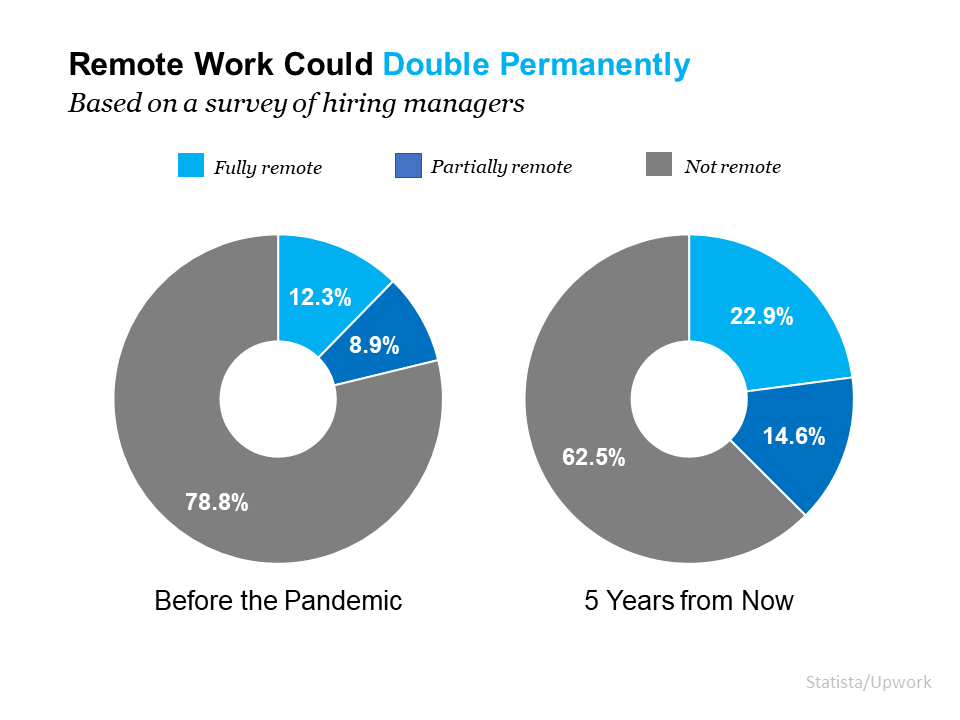
Right now, there are many buyers who are ready, willing, and able to purchase a home. Low mortgage rates and the ongoing rise in remote work have prompted buyers to think differently about where they live – and they’re taking action. If you put your house on the market while supply is still low, it will likely get a lot of attention from competitive buyers.
Bottom Line
Today’s ultimate sellers’ market holds great opportunities for homeowners ready to make a move. Listing your house now will maximize your exposure to serious buyers who will actively compete against each other to purchase it. Let’s connect to discuss how to jumpstart the selling process.
Maybe with the leverage you currently have, you can negotiate a deal that will allow you to make the move of your dreams. What’s your home’s value?
When you hear the phrase home price appreciation, what does it mean to you? Through context clues alone, chances are you know it has to do with rising home prices. And as a seller, you know rising home prices are good news for your potential sale. But let’s look past the dollar signs and dive deeper into the concept. To truly understand home price appreciation, you need to know how it works and why it matters to you.
“Appreciation, in general terms, is an increase in the value of an asset over time. The increase can occur for a number of reasons, including increased demand or weakening supply, or as a result of changes in inflation or interest rates. This is the opposite of depreciation, which is a decrease in value over time.”
When we consider this definition and how it applies to real estate, a few words stick out: supply and demand. In today’s real estate market, we’re experiencing high buyer demand and very few sellers listing their homes for sale (see maps below):No matter the industry, anytime there’s more demand than supply, prices naturally rise. It happens because buyers are willing to pay more to secure the scarce product or service they’re looking for. That’s exactly what’s happening in today’s real estate market. Buyers are competing with one another to purchase a home, leading to bidding wars that drive prices up. For sellers, the rising prices mean that opportunity is knocking.
According to Quicken Loans, the national average home price appreciation rate is between 3-5% in a typical year. Today, home prices are appreciating well beyond the norm thanks to high demand. Here are the latest expert projections on the rate of home price appreciation for this year (see chart below):
Compared to the normal pace of 3-5% appreciation per year, the current average forecast of nearly 11.5% is significant.
For sellers, this means that with the current rise in prices, your house may be worth more than you realize. That price appreciation helps give your equity a boost. Equity is the difference between what you owe on the home and its market value based on factors like price appreciation. It works like this (see chart below):You can use your built-up equity to power a move into your dream home, or you can put it toward life-changing goals like funding an education or opening a business.
But don’t wait. While price appreciation is strong now, those same experts say it’ll start to appreciate at a more normalized pace next year. If you list your house sooner rather than later, you’ll be in a better position to capitalize on the higher-than-average home price appreciation we’re seeing today.
Bottom Line
If you’re thinking of selling your house, there really is no time like the present. Let’s connect so you can get an expert market analysis of your home and its potential.
Maybe with the leverage you currently have, you can negotiate a deal that will allow you to make the move of your dreams. What’s your home’s value?
In today’s sellers’ market, you’re set up to win big when you list your house.
That’s because homes are selling fast, receiving 4.4 offers on average and often selling above the asking price. Then, when you buy your next home, you’ll also win by addressing your changing needs and taking advantage of near historic-low mortgage rates.
If you’re ready to make a move, let’s connect so you can capitalize on today’s market and find your next dream home.
Maybe with the leverage you currently have, you can negotiate a deal that will allow you to make the move of your dreams. What’s your home’s value?