If you’re looking to buy or sell a house, chances are you’ve heard talk about today’s rising home prices. And while this increase in home values is great news for sellers, you may be wondering what the future holds. Will prices continue to rise with time, or should you expect them to fall?
To answer that question, let’s first understand a few terms you may be hearing right now.
Appreciation is an increase in the value of an asset.
Depreciation is a decrease in the value of an asset.
Deceleration is when something happens at a slower pace.
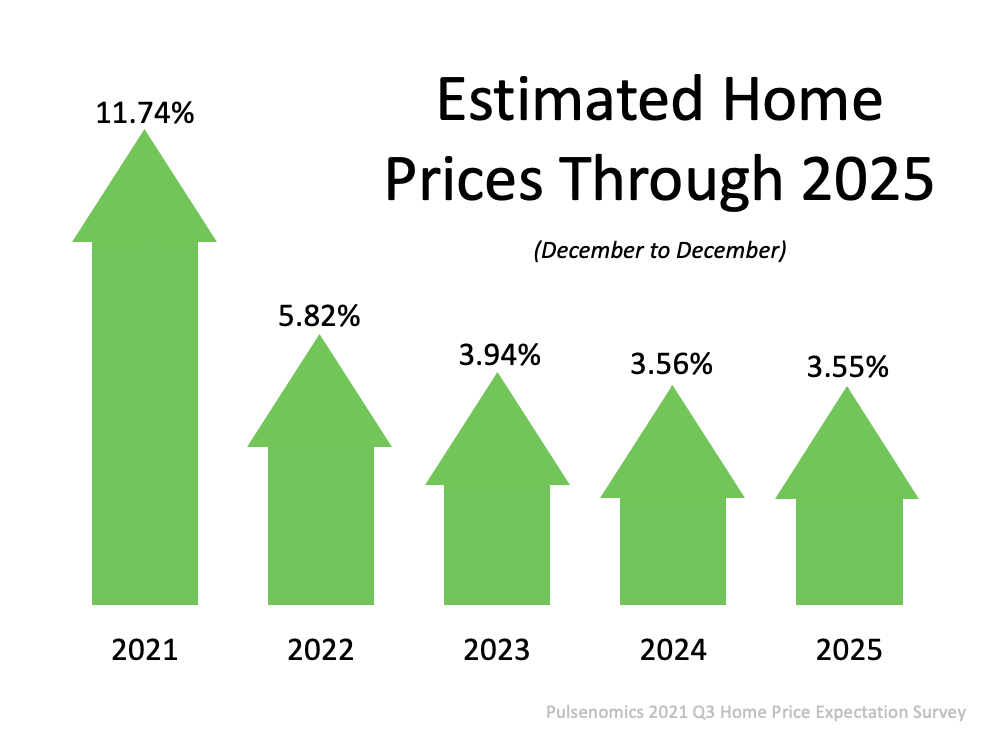
It’s important to note home prices have increased, or appreciated, for 114 straight months. To find out if that trend may continue, look to the experts. Pulsenomics surveyed over 100 economists, investment strategists, and housing market analysts asking for their five-year projections. In terms of what lies ahead, experts say the market may see some slight deceleration, but not depreciation.
Here’s the forecast for the next few years:As the graph above shows, prices are expected to continue to rise, just not at the same pace we’ve seen over the last year. Over 100 experts agree, there is no expectation for price depreciation. As the arrows indicate, each number is an increase, which means prices will rise each year.
Bill McBride, author of the blog Calculated Risk, also expects deceleration, but not depreciation:
“My sense is the Case-Shiller National annual growth rate of 19.7% is probably close to a peak, and that year-over-year price increases will slow later this year.”
“. . . home price appreciation is on the cusp of flipping to a deceleratingtrend.”
A recent article from realtor.com indicates you should expect:
“. . . annual price increases will slow to a more normal level, . . .”
What Does This Deceleration Mean for You?
What experts are projecting for the years ahead is more in line with the historical norm for appreciation. According to data from Black Knight, the average annual appreciation from 1995-2020 is 4.1%. As you can see from the chart above, the expert forecasts are closer to that pace, which means you should see appreciation at a level that’s aligned with a more normal year.
If you’re a buyer, don’t expect a sudden or drastic drop in home prices – experts say it won’t happen. Instead, think about your homeownership goals and consider purchasing a home before prices rise further.
If you’re a seller, the continued home price appreciation is good news for the value of your house. Work with an agent to list your house for the right price based on market conditions.
Bottom Line
Experts expect price deceleration, not price depreciation over the coming years. Let’s connect to talk through what’s happening in the housing market today, where things are headed, and what it means for you.
Put an experts eye on your home search! You’ll receive personalized matches of results delivered directly to you. We’ll take into account your goals, criteria, and preferences to find properties that are exactly what you were always dreaming of. Start Here!
Maybe with the leverage you currently have, you can negotiate a deal that will allow you to make the move of your dreams. What’s your home’s value?
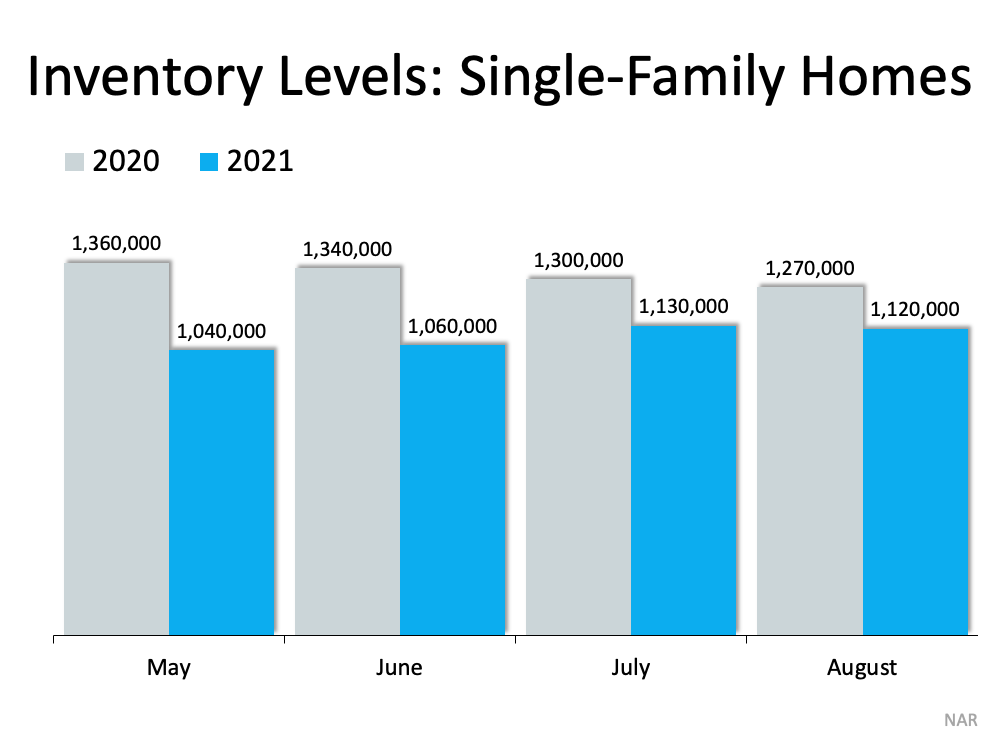
Sellers have a great opportunity this season as buyer demand still heavily outweighs the current supply of homes for sale. According to the National Association of Realtors (NAR), today’s housing inventory sits at only a 2.6-month supply. To put that into perspective, a neutral market typically features a 6-month supply. That places today’s market firmly in the sellers’ market category.
That same NAR data also shows today’s inventory of single-family homes is trailing behind the level we saw last year (see graph below):Because of the ongoing supply challenges, buyers can feel like they’re wandering across a vast, empty desert when searching for their next home. That means your house could provide an oasis for buyers thirsty for options – and it could increase the chances of buyers entering a bidding war for your home.
The latest Realtors Confidence Index Survey from NAR shows houses are receiving an average of 3.8 offers. A multiple-offer scenario lets you select the best offer and gives you incredible leverage when you sell this fall.
Bottom Line
Buyers today are looking for relief as they wander today’s inventory desert. Listing your house this fall – before more options appear – gives your house the best chance to be noticed by multiple buyers. Let’s connect today so your house can stand out as the oasis it truly is.
Maybe with the leverage you currently have, you can negotiate a deal that will allow you to make the move of your dreams. What’s your home’s value?
Put an experts eye on your home search! You’ll receive personalized matches of results delivered directly to you. We’ll take into account your goals, criteria, and preferences to find properties that are exactly what you were always dreaming of. Start Here!
Even in a hot sellers’ market like today’s in which homes are selling so quickly, it’s still important to make a good first impression on potential buyers. Taking the time upfront to prep your house appropriately can bring in the greatest return on your investment.
Here are four simple tips to make sure you maximize the sale of your house this fall.
1. Price It Right
One of the first things buyers will notice is the price of your house. That’s why it’s important to price it right. Your goal in pricing your house is to draw attention from competing buyers and let bidding wars push the final sales price up. Pricing your house too high to begin with could put you at a disadvantage by discouraging buyers from making an offer.
Your trusted real estate advisor can help you find the price for your home that reflects the current market value. Lean on your agent to help you with this crucial first step.
2. Keep It Clean
It may sound simple, but keeping your house clean is key to making sure it gets the attention it deserves. As realtor.com says in the Home Selling Checklist:
“When selling your home, it’s important to keep everything tidy for buyers. . . . Remember to take special care with the bathroom, making sure the tile, counters, shower, and floors shine.”
Before each buyer visits, assess your space and determine what needs your attention. Wash the dishes, make the beds, and put away any toys. Doing these simple things can reduce any potential distractions for buyers.
3. Make It Easy To Visit
Giving buyers the opportunity to see your house on their schedule can be a true game-changer. Buyers are less likely to make an offer if it’s difficult to plan a tour or they can’t easily fit it into their schedule. Making your house available as often as possible helps create opportunities for more buyers to fall in love with your house.
Rest assured your trusted real estate advisor will keep your health and safety top of mind when buyers tour your home. Agents use the latest guidance to stay up to date on any protocols and sanitization recommendations.
4. Help Buyers Feel at Home
Finally, it’s important for buyers to see all the possible ways they can make your house their next home. As the realtor.com article puts it:
“The goal is to create a blank canvas on which buyers can project their own visions of living there, and loving it.”
An easy first step to create this blank canvas is removing personal items – pictures, awards, and sentimental belongings – from your space. If you’re unsure what should be packed away and what can stay, consult your trusted real estate advisor. Spending the time on this step can pay off in the long run, as the 2021 Profile of Home Staging from the National Association of Realtors notes:
“Eighteen percent of sellers’ agents said home staging increased the dollar value of a residence between 6% and 10%.”
Bottom Line
To make the most of today’s sellers’ market, avoid the temptation to skip over the essential preparation steps. Let’s connect today to discuss all the ways you can maximize your home sale.
Maybe with the leverage you currently have, you can negotiate a deal that will allow you to make the move of your dreams. What’s your home’s value?
Put an experts eye on your home search! You’ll receive personalized matches of results delivered directly to you. We’ll take into account your goals, criteria, and preferences to find properties that are exactly what you were always dreaming of. Start Here!
Sellers can benefit from more offers to pick from, higher home values, and a faster sales process. That might be why 73% of people believe it’s a good time to sell.
Sellers, don’t miss out on this unique opportunity. Let’s connect so you can take advantage of this hot sellers’ market
Maybe with the leverage you currently have, you can negotiate a deal that will allow you to make the move of your dreams. What’s your home’s value?
There are many headlines out there that claim we’re reverting to a more normal real estate market. That would indicate the housing market is returning to the pre-pandemic numbers we saw from 2015-2019. But that’s not happening. The market is still extremely vibrant as demand is still strong even while housing supply is slowly returning.
“conforming to a type, standard, or regular pattern: characterized by that which is considered usual, typical, or routine.”
Using this definition, here are five housing industry metrics that prove we’re nowhere near normal.
1. Mortgage Rates
If we look at the 30-year mortgage rate chronicled by Freddie Mac, we can see the average rates by decade:
1970s: 8.86%
1980s: 12.7%
1990s: 8.12%
2000s: 6.29%
2010s: 4.09%
Today, the average mortgage rate stands at 2.87%, which is very close to the historic low.
Currently, mortgage rates are anything but usual, typical, or routine.
2. Home Price Appreciation
According to Black Knight, a housing data and analytics company, the average annual appreciation on residential real estate prices since 1995 has been 4.14%.
According to the latest forecast from the National Association ofRealtors (NAR), home price appreciation will hit 14.1% this year, which will be greater than any year since Black Knight began collecting this data.
Currently, home price appreciation is anything but usual, typical, or routine.
“Months’ supply refers to the number of months it would take for the current inventory of homes on the market to sell given the current sales pace. Historically, six months of supply is associated with moderate price appreciation, and a lower level of months’ supply tends to push prices up more rapidly.”
As of the latest Existing Homes Sales Report from NAR, the current months’ supply of inventory stands at 2.6. That’s less than half of a normal supply.
Currently, the supply of homes for sale is anything but usual, typical, or routine.
4. Days It Takes To Sell a Home
The days-on-market metric gives an indication of how hot a market is and how quickly homes are selling. In 2019, prior to the pandemic, the average days on market stood at 35, according to NAR. Today, that number is cut in half and is now at 17 days.
Currently, the days-on-market metric is anything but usual, typical, or routine.
As rent prices continue to soar, many renters want to know what they can do to get ready to buy their first home. According to recent data from ApartmentList.com:
“The first half of 2021 has seen the fastest growth in rent prices since the start of our estimates in 2017. Our national rent index has increased by 11.4 percent since January . . . .”
Those rising rental costs may make it seem impossible to prepare for homeownership if you’re a renter. But the truth is, there are ways you can – and should – prepare to purchase your first home. Here’s some expert advice on what to do if you’re ready to learn more about how to escape rising rents.
Start Saving – Even Small Amounts – Now
Experts agree, setting aside what you can – even smaller amounts of money – into a dedicated savings account is a great starting point when it comes to saving for a down payment. As Cindy Zuniga-Sanchez, Founder of Zero-Based Budget Coaching LLC, says:
“I recommend saving for a home in a ‘sinking fund’ . . . . This is a savings account separate from your emergency fund that you use to save for a short or mid-term expense.”
Zuniga-Sanchez adds saving in smaller increments can help make a large goal – such as saving for a down payment –achievable:
“Breaking up your goals into smaller bite-sized pieces by saving incrementally can make a large daunting number more manageable.”
Assess Your Finances and Work on Your Credit
Another tip experts recommend: take a look at your overall finances and credit score and find ways to reduce your debt. According to the HUD, the average credit score of first-time homebuyers is 716. If you’re not sure what your credit score is, there are numerous online tools that can help you check. If your score is below that average, don’t fret. Remember that an average means there are homeowners with credit scores both above and below that threshold.
If you find out your score is below the average, there are several ways to improve your credit before you apply for a loan. HUD recommends reducing your debt as much as you can, paying your bills on time, and using your credit card responsibly.
Start the Conversation with Your Advisor Today
Finally, it’s important to talk to someone who understands the market and what it takes to become a first-time homebuyer. That’s where we come in. A trusted advisor can help you navigate your specific market and talk you through all the available options. Having the right network of real estate and lending professionals in your corner can help you plan for the homebuying process as well as determine what you can afford and how you can get pre-approved when you’re ready.
Most importantly, we can help you understand how homeownership is achievable. As Lauren Bringle, Accredited Financial Advisor with Self Financial, says:
“Don’t write home ownership off just because you have a low income . . . . With the right tools, resources and assistance, you could still achieve your dream.”
Bottom Line
If you’re planning to be a homeowner one day, the best thing you can do is start preparing now. Even if you don’t think you’ll purchase for a few years, let’s connect today to discuss the process and to set you up for success on your journey to homeownership.
Maybe with the leverage you currently have, you can negotiate a deal that will allow you to make the move of your dreams. What’s your home’s value?
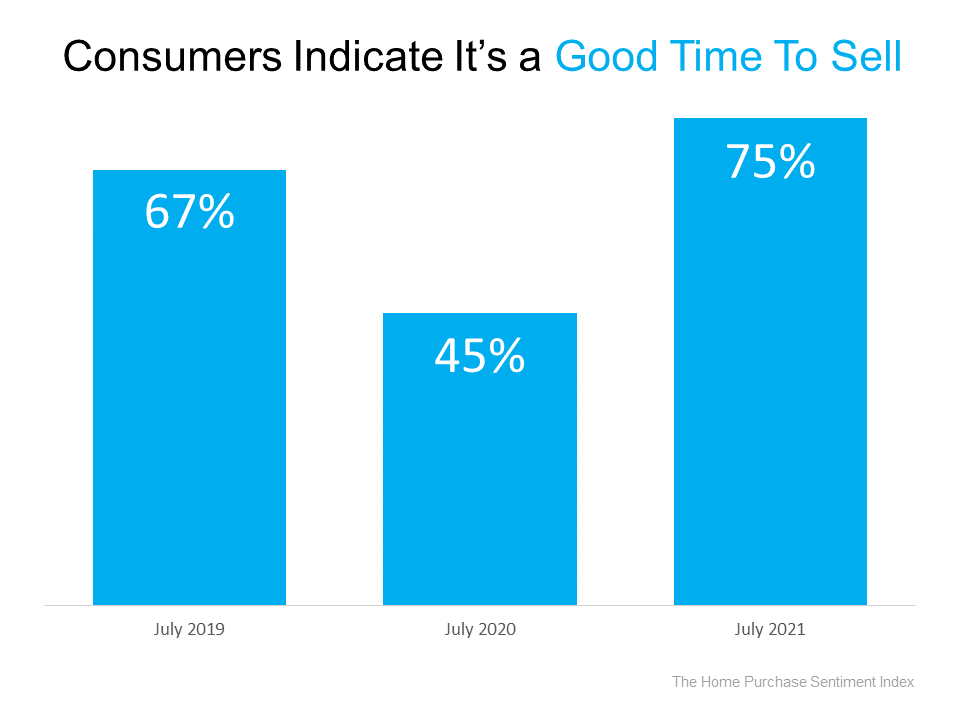
If you’re trying to decide whether or not to sell your house, this is the time to think seriously about making a move. Fannie Mae’s recent Home Purchase Sentiment Index (HPSI) reveals the number of respondents who say it’s a good time to sell is higher now than it was over the past few summers (see graph below). Today, the majority of consumers, 75 percent, say it’s a good time to sell a house.
Why is sellers sentiment up year-over-year?
The higher good time to sell sentiment has to do with today’s market conditions, specifically low housing supply and high buyer demand. In the simplest terms, we don’t have enough houses available for sale to meet buyer demand.
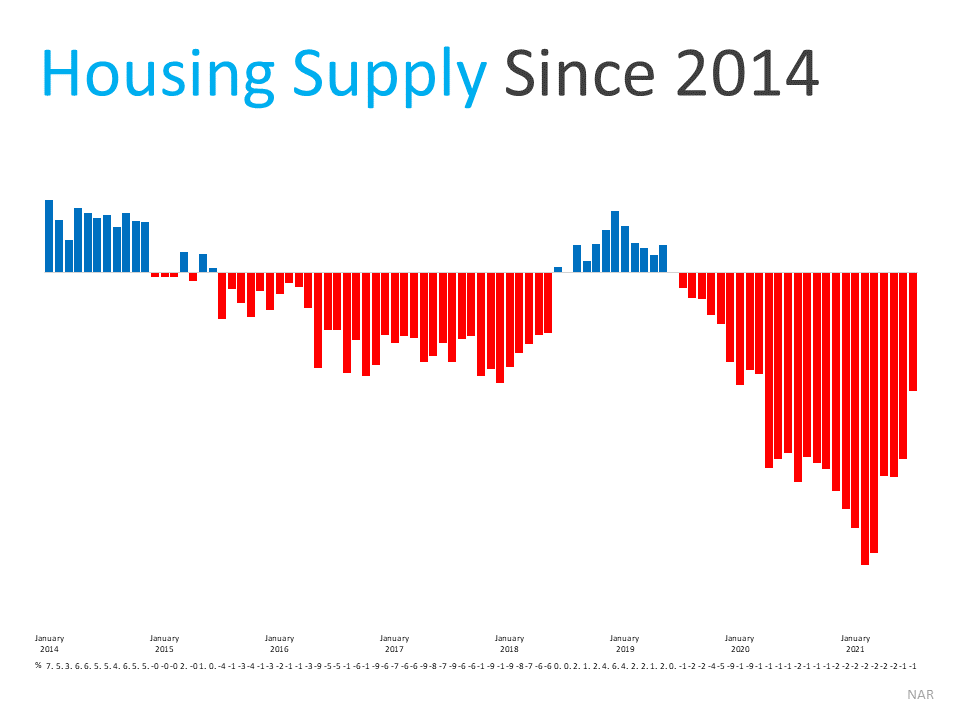
According to the latest data from the National Association of Realtors (NAR), we’re still firmly in a sellers’ market because housing supply is well below a balanced norm (shown in the graph below).Clearly, the scales are tipped in a seller’s favor today. But while housing supply is undeniably low, the right side of the graph shows how the inventory situation is improving little by little each month as more sellers list their homes for sale.
As a seller, that means each month, buyers have more options to pick from. By extension, that means your house may get less buyer attention with time. Danielle Hale, Chief Economist for realtor.com, explains it like this:
“More homeowners continue to list homes for sale compared to a year ago… Notably, while new listings continue to lag behind a more ‘normal’ 2019 pace, the gap is shrinking. Even though homes continue to sell quickly thanks to high demand and limited supply, new listings are subtly shifting the balance of market conditions in favor of buyers.”
So, what’s that mean for you?
If you’ve been waiting for the perfect time to sell, there may not be a better chance than right now. Inventory is gradually increasing each month, so selling sooner rather than later will help you maximize your home’s potential.
Bottom Line
If you’re planning to sell your house, 2021 is still the year to do it. The unique mix of low supply and high demand won’t last forever. Let’s connect to discuss what you need to do now to sell your house and take advantage of this sellers’ market.
Maybe with the leverage you currently have, you can negotiate a deal that will allow you to make the move of your dreams. What’s your home’s value?
In today’s sellers’ market, you’re set up to win big when you list your house.
That’s because homes are selling fast, receiving 4.4 offers on average and often selling above the asking price. Then, when you buy your next home, you’ll also win by addressing your changing needs and taking advantage of near historic-low mortgage rates.
If you’re ready to make a move, let’s connect so you can capitalize on today’s market and find your next dream home.
Maybe with the leverage you currently have, you can negotiate a deal that will allow you to make the move of your dreams. What’s your home’s value?
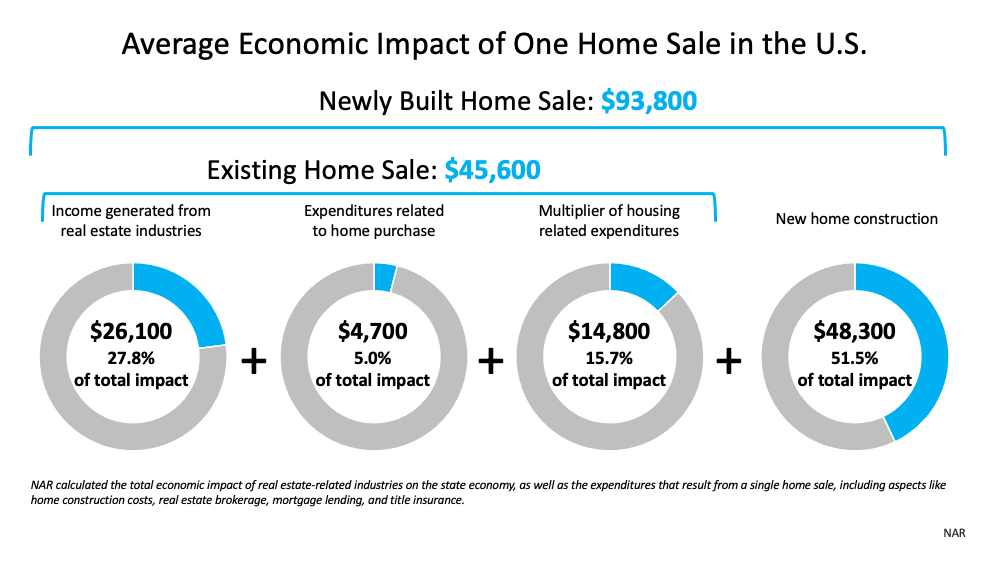
If you’re thinking of buying or selling a house, chances are you’re focusing on the many extraordinary ways it’ll change your life. What you may not realize is that decision impacts people’s lives far beyond your own. Home purchases and sales are significant drivers of economic activity. They have a major impact on your community and the entire U.S. economy via the multiple industries and professionals that take part in the process.
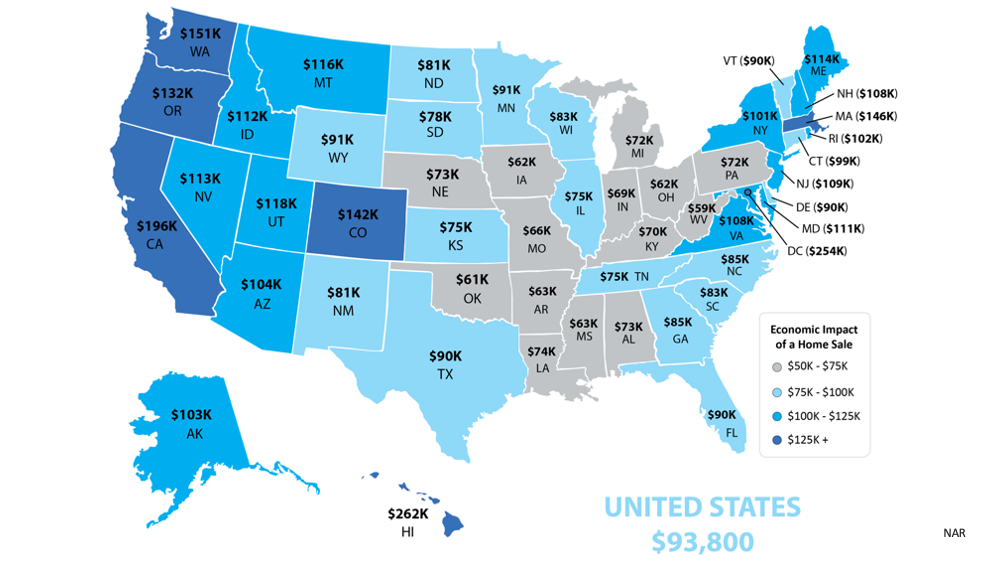
The National Association of Realtors (NAR) releases a report each year that highlights just how much economic activity a home sale generates. The chart below shows how the sale of both a newly built home and an existing home impact the economy:To dive a level deeper, NAR also provides a detailed look at how that varies state-by-state for newly-built homes (see map below):As you can see, a single home sale can have a massive effect on the overall economy. Ali Wolf, Chief Economist for Zonda, talks about this in a recent article, noting there’s a significant impact at each distinct phase of the transaction:
“The housing market contributes to the economy in four main stages: during planning and land development, throughout the actual construction of the home, at the point of sale, and upon moving in.”
When you buy or sell a home, you’re leaving a lasting impression on the community at large in addition to fulfilling your own needs. That’s because each stage of the process involves numerous contractors, specialists, lawyers, town and city officials, and so many other professionals. Every individual you work with, from your trusted real estate advisor to the architects who design new homes, has their own team of professionals involved behind the scenes.
Bottom Line
Homebuyers and sellers are economic drivers in their community and beyond. If you’re thinking of buying or selling, let’s connect today to start the process. It won’t just change your life; it’ll make a powerful impact on our entire community.


 Facebook
 X
X
 Pinterest
 Copy Link


![It’s Still a Sellers’ Market [INFOGRAPHIC] | MyKCM](https://files.mykcm.com/2021/09/22165444/20210924-MEM-1046x2173.png)


![Your Checklist To Get Ready To Sell [INFOGRAPHIC] | MyKCM](https://files.mykcm.com/2021/08/26133632/20210827-MEM-1046x1353.png)
![Sellers Are in a Sweet Spot [INFOGRAPHIC] | MyKCM](https://files.mykcm.com/2021/08/12132433/20210806-MEM-1-1046x2364.png)