The Green Team Realty March 2021 Housing Market Update was held on March 16 at 12:00 p.m. If you missed the live webinar or would like to watch it again, it’s available here:
Overview of the real estate market on the national level
Geoff Green, President of Green Team Realty, began the update with a quote from Lawrence Yun, Chief Economist at NAR:
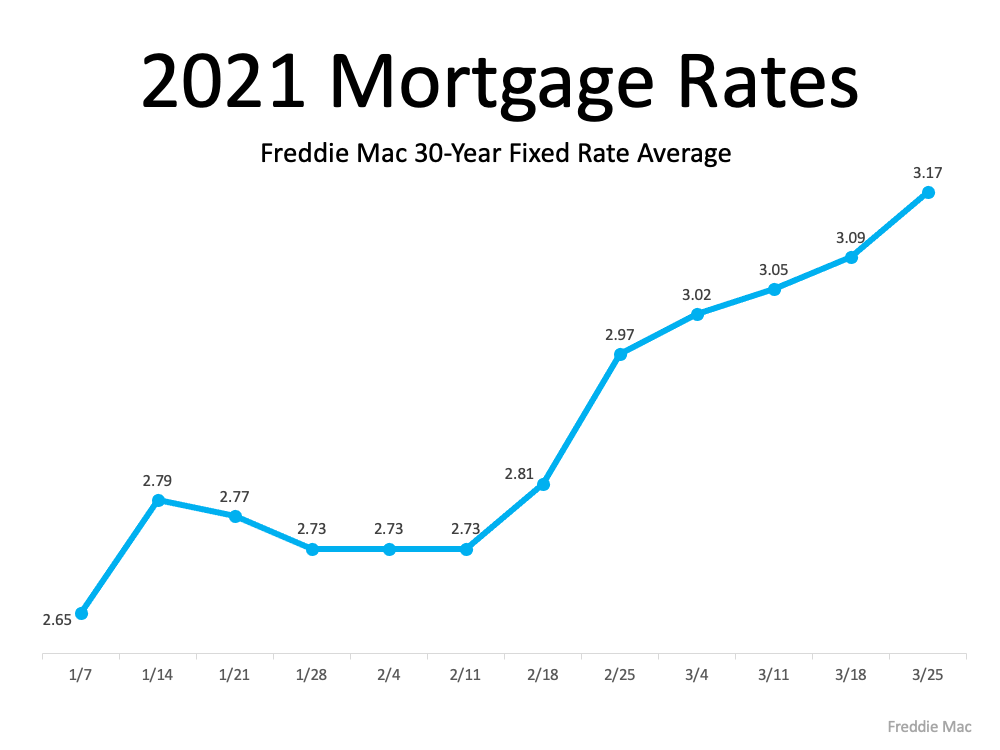
“Home sales could possibly reach 8 million if we had more inventory… Mortgage rates should remain very low throughout 2021, although we may have seen the lowest already.”
As shown in this graphic, foreclosure activity is minimal.
Geoff pointed out that with the job loss and economic woes resulting from the pandemic, you would expect the number of foreclosures to be much higher. According to DS News,
“About 325,000 people will exit the forbearance program over the next six to nine months without a plan in place. Some – but probably not all – of those loans will likely default.”
The continuing saga of low inventory – and the Sellers Market
Year-over-year changes indicate that this is a great time to sell. Inventory is so low, if you are thinking about getting your house on the market, now is the time to do it!
Home Price Appreciation
For an in-depth discussion on home price appreciation, watch the housing market update here.
National and Local Housing Market Stats (Orange County NY and Sussex County NJ) are then discussed.
“Housekeeping” Items
Meet our Panel
Geoff was joined by Keren Gonenof Green Team New Jersey Realty and Carol Buchanan of Green Team New York Realty. In addition, Ken Aulicino of Family First Funding added his expertise as a Mortgage Specialist.
The discussion began with the topic of buyers and possible issues in obtaining mortgages. In addition, whether appraisals were coming in, even with rising home prices. Geoff asked Ken Aulicino about whether rates were coming up. Even with rates coming up, historically they are still very low. Click here to watch the full panel discussion, including a question and answer session.
If you would like to get in touch with any of our panelists, their contact information is below:
We’ll see you on Tuesday, April 20 at 12 p.m. for our next Housing Market Update.
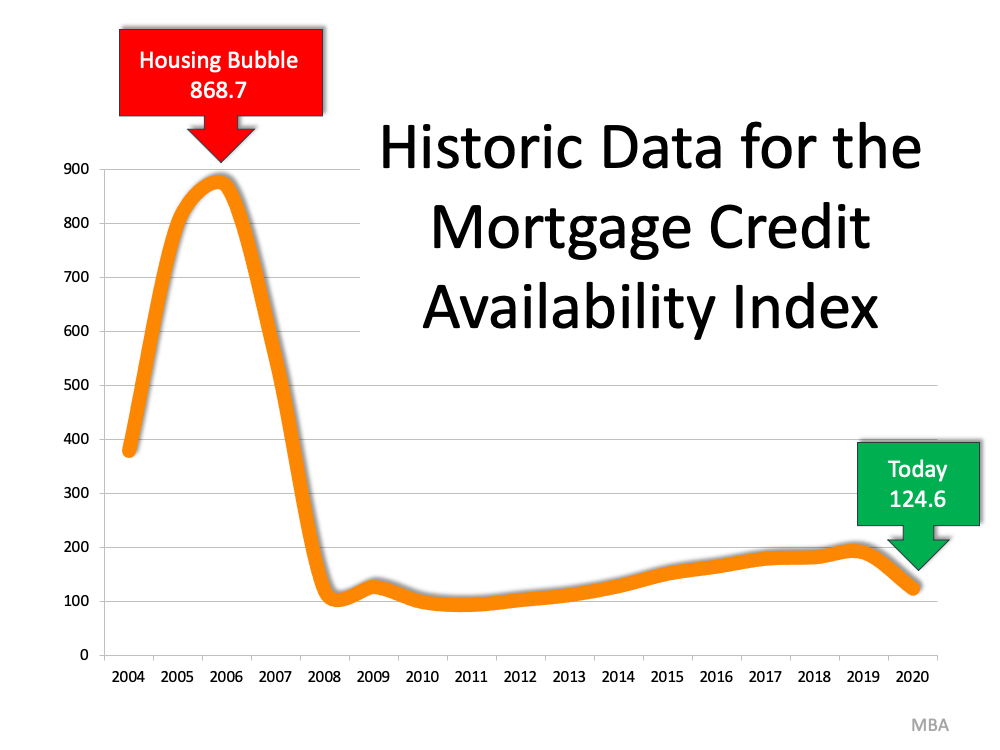
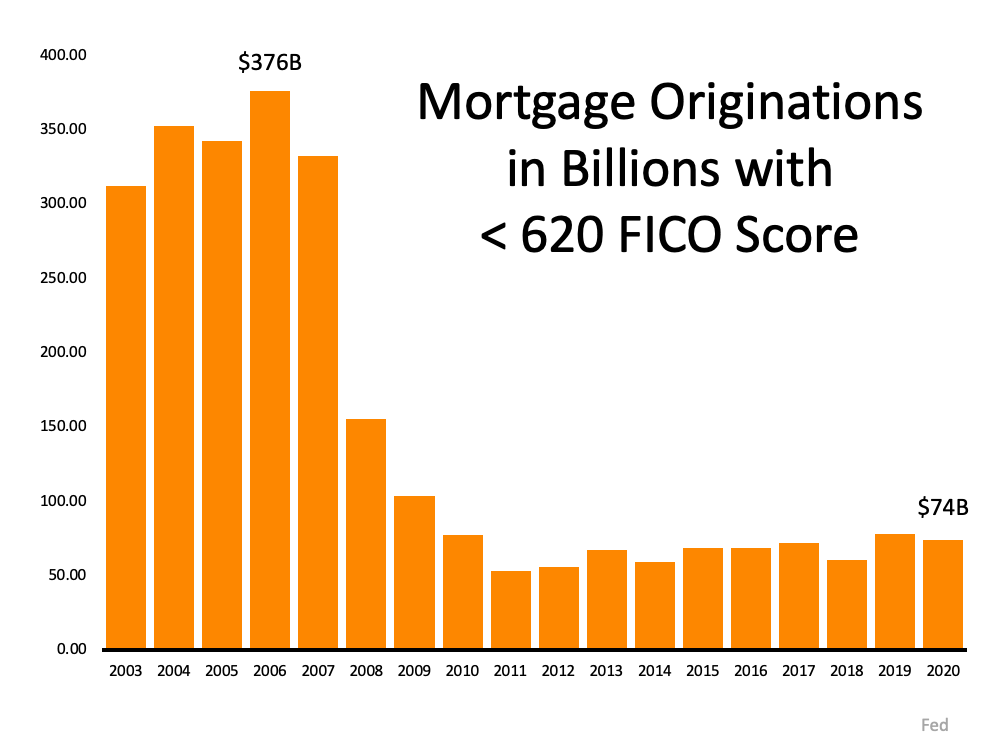
According to data from the most recent Origination Insight Report by Ellie Mae, the average FICO® score on closed loans reached 753 in February. As lending standards have tightened recently, many are concerned over whether or not their credit score is strong enough to qualify for a mortgage. While stricter lending standards could be a challenge for some, many buyers may be surprised by the options that are still available for borrowers with lower credit scores.
The fact that the average American has seen their credit score go up in recent years is a great sign of financial health. As someone’s score rises, they’re building toward a stronger financial future. As more Americans with strong credit enter the housing market, we see a natural increase in the FICO® score distribution of closed loans, as shown in the graph below:If your credit score is below 750, it’s easy to see this data and fear that you may not be able to qualify for a mortgage. However, that’s not always the case. While the majority of borrowers right now do have a score above 750, there’s more to qualifying for a mortgage than just the credit score, and there are still options that allow people with lower credit scores to buy their dream home. Here’s what Experian, a global leader in consumer and business credit reporting, says:
Federal Housing Administration (FHA) loans:“With a 3.5% down payment, homebuyers may be able to get an FHA loan with a 580 credit score or higher. If you can manage a 10% down payment, though, that minimum goes as low as 500.”
Conventional loans:“The most popular loan type typically comes with a 620 minimum credit score.”
S. Department of Agriculture (USDA) loans:“In general, lenders require a minimum credit score of 640 for a USDA loan, though some may go as low as 580.”
S. Department of Veterans Affairs (VA) loans:“VA loans don’t technically have a minimum credit score, but lenders will typically require between 580 and 620.”
There’s no doubt a higher credit score will give you more options and better terms when applying for a mortgage, especially when lending is tight like it is right now. When planning to buy a home, speaking to an expert about steps you can take to improve your credit score is essential so you’re in the best position possible. However, don’t rule yourself out if your score is less than perfect – today’s market is still full of opportunity.
Bottom Line
Don’t let assumptions about whether your credit score is strong enough put a premature end to your homeownership goals. Let’s connect today to discuss the options that are best for you.
For generations, the homebuying process never really changed. The seller would try to estimate the market value of the home and tack on a little extra to give themselves some negotiating room. That figure would become the listing price of the house. Buyers would then try to determine how much less than the full price they could offer and still get the home. The asking price was generally the ceiling of the negotiation. The actual sales price would almost always be somewhat lower than the list price. It was unthinkable to pay more than what the seller was asking.
Today is different.
The record-low supply of homes for sale coupled with very strong buyer demand is leading to a rise in bidding wars on many homes. Because of this, homes today often sell for more than the list price. In some cases, they sell for a lot more.
According to the Home Buyers and Sellers Generational Trendsreport just released by the National Association of Realtors (NAR), 45% of buyers paid full price or more.
You may need to change the way you look at the asking price of a home.
In this market, you likely can’t shop for a home with the old-school mentality of refusing to pay full price or more for a house.
Because of the shortage of inventory of houses for sale, many homes are actually being offered in an auction-like atmosphere in which the highest bidder wins the home. In an actual auction, the seller of an item agrees to take the highest bid, and many sellers set a reserve price on the item they’re selling. A reserve price is the minimum amount a seller will accept as the winning bid.
When navigating a competitive housing market, think of the list price of the house as the reserve price at an auction. It’s the minimum the seller will accept in many cases. Today, the asking price is often becoming the floor of the negotiation rather than the ceiling. Therefore, if you really love a home, know that it may ultimately sell for more than the sellers are asking. So, as you’re navigating the homebuying process, make sure you know your budget, know what you can afford, and work with a trusted advisor who can help you make all the right moves as you buy a home.
Bottom Line
Someone who’s more familiar with the housing market of the past than that of today may think offering more for a home than the listing price is foolish. However, frequent and competitive bidding wars are creating an auction-like atmosphere in many real estate transactions. Let’s connect so you have the best advice on how to make a competitive offer on a home in our local market.
Freddie Mac recently released their Quarterly Refinance Statistics report which covers refinances through 2020. The report explains that the dollar amount of cash-out refinances was greater in 2020 than in recent years. A cash-out refinance, as defined by Investopia, is:
“a mortgage refinancing option in which an old mortgage is replaced for a new one with a larger amount than owed on the previously existing loan, helping borrowers use their home mortgage to get some cash.”
The Freddie Mac report led to articles like the one published by The Real Deal titled, House or ATM? Cash-Out Refinances Spiked in 2020, which reports:
“Americans treated their homes like ATMs last year, withdrawing $152.7 billion amid a cash-out refinancing spree not seen since before the 2008 financial crisis.”
Whenever you combine the terms “spiked,” “homes like ATMs,” and “financial crisis,” it conjures up memories of the housing crash we experienced in 2008.
However, that comparison is invalid for three reasons:
1. Americans are sitting on much more home equity today.
Mortgage data giant Black Knight just issued information on the amount of tappable equity U.S. homeowners with a mortgage have. Tappable equity is the amount of equity available for homeowners to use and still have 20% equity in their home. Here’s a graph showing the findings from their report:In 2006, directly before the crash, tappable home equity in the U.S. topped out at $4.6 trillion. Today, that number is $7.3 trillion.
As Black Knight explains:
“At year’s end, some 46 million homeowners held a total $7.3 trillion in tappable equity, the largest amount ever recorded…That’s an increase of more than $1.1 trillion (+18%) since the end of 2019, the largest percentage gain since 2013 and – you guessed it – the largest dollar value gain in history, to boot. All in all, it works out to roughly $158,000 on average per homeowner with tappable equity, up nearly $19,000 from the end of 2019.”
2. Homeowners cashed-out a much smaller amount this time.
In 2006, Americans cashed-out a total of $321 billion. In 2020, that number was less than half, totaling $153 billion. The $321 billion made up 7% of the total tappable equity in the country in 2006. On the other hand, the $153 billion made up only 2% of the total tappable equity last year.
3. Fewer homeowners tapped their equity in 2020 than in 2006.
Freddie Mac reports that 89% of refinances in 2006 were cash-out refinances. Last year, that number was less than half at 33%. As a percentage of those who refinanced, many more Americans lowered their equity position fifteen years ago as compared to last year.
Bottom Line
It’s true that many Americans liquidated a portion of the equity in their homes last year for various reasons. However, less than half of them tapped their equity compared to 2006, and they cashed-out less than one-third of that available equity. Today’s cash-out refinance situation bears no resemblance to the situation that preceded the housing crash.
Maybe with the leverage you currently have, you can negotiate a deal that will allow you to make the move of your dreams. What’s your home’s value?
Thursday, February 11, was the second night of Green Team Realty’s 2020 Awards Celebration. Like many events occurring in 2020, it took place on Zoom! The first night celebrated Sales Awards. The third and last night was for the Momentum Builder Award. And this night was to announce the Team Player and Citizen of the Year Awards.
Team Player Award
Geoff Green, President of Green Team Realty, stresses the importance of elevating those around you. .Focusing on winning each day creates a winning culture, a Green Team Core Value. The recipients of this award do all that. In addition, they are deemed most reliable, and positive. Furthermore, they are dependable, work well with others, and have great problem-solving skills.
Before the winners are announced, a word from our Broker Managers
The Broker Managers were instrumental in selecting the Team Player Award Recipients. Lucyann Tinnirello, Broker Manager of the Warwick office, said this about her selection:
“The person selected has a lot of the attributes described above. Furthermore, sales associates in the office had a say in the selection and hit the nail right on the head!”
Kim Lasalandra, Broker Manager of the Vernon office, had this to say:
“This person is always very reliable and always seems to be around at the right time. If not out with clients, then she’s in the office helping other agents.”
And the Team Players of the Year are…
Tiffany just celebrated her second year with Green Team. She had set business goals for herself, which she achieved for 2020. However, she had no idea that she would be named Team Player of Green Team New York Realty. When Lucyann called to tell her, she was overwhelmed with emotion. Tiffany summed up her feelings on teamwork with one of her favorite quotes:
“Teamwork divides the tasks and multiplies the success.”
Cathieloves the truly positive attitude that exists at Green Team New Jersey Realty. She has found a sense of comradery at Green Team that was missing in other offices she has been with. Cathie loves being part of the Green Team and is grateful to be here.
Geoff, in turn, told Cathie how much he appreciates her positive attitude and willingness to help others. He stressed how important connection with others is, especially now. The team players are the ones that help provide that connection, something he is grateful for.
Citizen of the Year Award
Geoff began the presentation of this award with a quote by George Elliston, American Journalist and Poet, 1883-1946:
“How beautiful a day can be when kindness touches it.”
Recipients of this award have made outstanding contributions to our local communities. Many of the sales associates in each office are very involved in the community, making the decision a difficult one. However, in the end, there were two very deserving individuals who received this award.
According to Lucyann, Carol has a dedicated heart. It takes a special person to be so kind. In addition to being a loving mother, devoted wife, doting grandmother, and busy real estate professional, Carol makes time to give to her community. Carol has been a driver for Meals on Wheels for over 12 years now. It’s been hard during COVID since she hasn’t been able to chat with the seniors she is delivering to. She misses that connection with them as much as they do.
Carol and her husband have always been involved in the community. They raised their children to give back, and are now raising their grandchildren to do the same. Lucyann commented that at Christmas, Carol was at Shoprite, ringing the bell for the Salvation Army with her granddaughter. As Carol says,
“Volunteering is good for the soul.”
Another Green Teamer who believes in the power of volunteering is:
Kim stated that Alison is also a dedicated wife, mother, and fabulous real estate agent. She also spends a lot of her time helping the school and the community. Alison is currently the current President of SCA (School Community Association) at Vernon Township High School. She was the treasurer for 2 years. Before that, the secretary. Last year, both the president and vice president vacated their positions. Alison stepped up to become President. What’s more, her mother stepped up to take on the treasurer role.
Basically, the SCA raises a lot of money through different programs to assist the school. 2020 was a difficult year. The usual fundraisers are social events. Therefore, they could not be held due to COVID. An online auction is being planned to raise money for scholarships for high school seniors. The organization also helps senior citizens, and local children through the Giving Tree project.
A surprise ending to the evening…
Geoff was moved by the work that these volunteers and their organizations are doing. Furthermore, upon hearing the difficulties that non-profits were facing raising funds due to COVID, he decided right then to do something special. Each Citizen of the Year Award recipient will receive $500 to be donated to the charities of their choice. Geoff went on to say, when all is said and done, these are the things that will matter most. Family, and helping others.
Congratulations to our Team Players and Citizens of the Year!
It was a night to remember. Actually, it was three nights to remember! In a “normal” year, Green Team sales associates and staff would gather for a festive evening of awards, photos, food, drink, and dancing to live music. However, 2020 was not a normal year. In case you missed any of it or would like to see it again, here is the 2020 Awards Ceremony Recap. Below you’ll find a list of the awards and recipients in each category.
The team player award honors the sales associate deemed the most reliable, positive, and dependable. Furthermore, that person works well with others and has great problem-solving skills.
Recipients of the Citizen of the Year Award have made outstanding contributions to our local communities. Here are the award recipients for 2020.
Every year Geoff Green selects a sales associate who has demonstrated hard work and determination while overcoming obstacles. That someone has come through a tough spot in life and turned challenges into success. Furthermore, that person has shown success in not only real estate, but in life. For 2020, the Momentum Builder Award recipient was Keren Gonen.
To learn more about Keren’s inspiring story and attitude, click here.
There have been a lot of headlines reporting on how homeowner equity (the difference between the current market value of your home and the amount you owe on your mortgage) has dramatically increased over the past few years. CoreLogic indicated that equity increased for the average homeowner by $17,000 in the last year alone. ATTOM Data Solutions, in their latest U.S. Home Equity Report, revealed that 30.2% of the 59 million mortgaged homes in the United States have at least 50% equity. That doesn’t even include the 38% of homes that are owned free and clear, meaning they don’t have a mortgage at all.
How can equity help a household?
Having equity in your home can dramatically impact your life. Equity is like a savings account you can tap into when you need cash. Like any other savings, you should be sensible in how you use it, though. Here are three good reasons to consider using your equity.
1. You’re experiencing financial hardship (job loss, medical expenses, etc.)
Equity gives you options during difficult financial times. With equity, you could refinance your house to get cash which may ease the burden. It also puts you in a better position to talk to the bank about restructuring your home loan until you can get back on your feet.
Today, there are 2.7 million Americans who are currently in a forbearance program because of the pandemic. Ninety percent of those in the program have at least 10% equity. That puts them in a better position to get a loan modification instead of facing foreclosure because many banks will see the equity as a form of collateral in a new deal. If you’re in this position, even if you can’t get a modification, the equity allows you the option to sell your house and walk away with your equity instead of losing the house and your investment in it.
2. You need money to start a new business
We’ve all heard the stories about how many great American companies started in the founder’s garage (i.e., Disney, Hewlett Packard, Apple, Yankee Candle, Keeping Current Matters). What we might not realize, however, is the garage (along with the rest of the home) supplied the start-up money for many of these companies in the form of a refinance.
If you’re passionate about an idea you have for a new product or service, the equity in your home may enable you to make that dream a reality.
3. You want to invest in a loved one’s future
It’s been a long-standing tradition in this country for many households to help pay college expenses for their children. Some have tapped into the equity in their homes to do that.
Additionally, George Ratiu, Senior Economist for realtor.com, notes:
“52% of Americans who bought their first home in 2020 said they got help with their down payment from friends or family. The number one lender? Their parents.”
It’s safe to assume a percentage of that down payment money likely came from home equity.
Bottom Line
Savings in any form is a good thing. The forced savings you can earn from making a mortgage payment enables you to build wealth through home equity. That equity can come in handy in both good and more challenging times.
When thinking about selling, homeowners often feel they need to get their house ready with some remodeling to make it more appealing to buyers. However, with so many buyers competing for available homes right now, renovations may not be as vital as they would be in a more normal market. Here are two things to keep in mind if you’re thinking of selling this season.
1. There aren’t enough homes for sale right now.
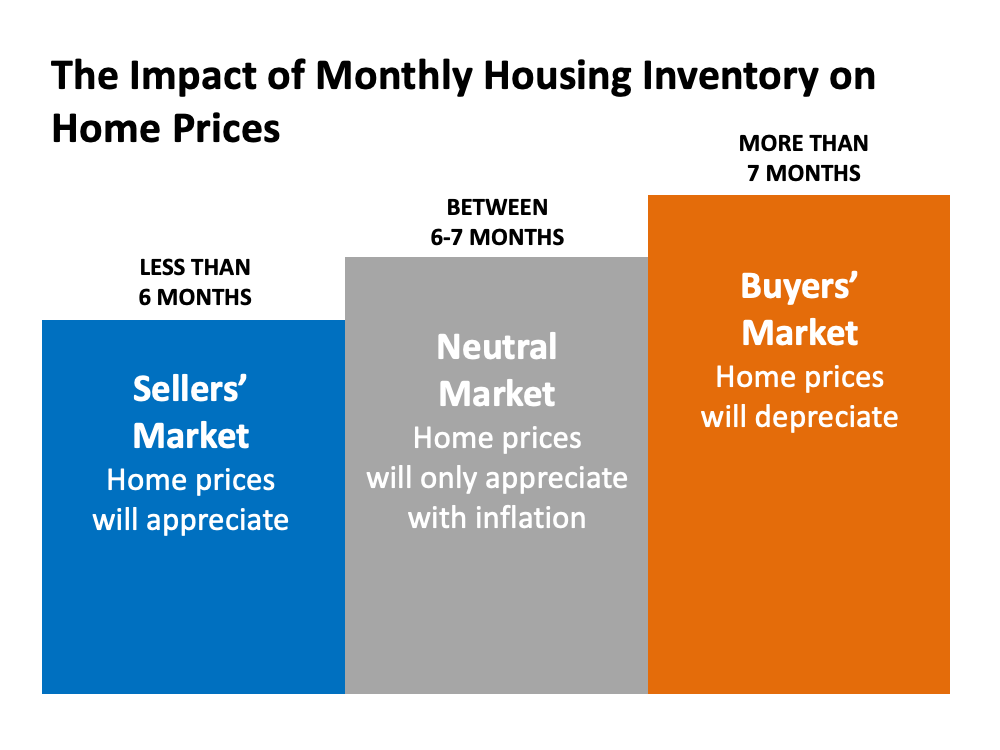
A normal market has a 6-month supply of houses for sale, but today’s housing inventory sits far below that benchmark. According to the National Association of Realtors (NAR), there’s only a 1.9-month supply of homes available today. As a result, buyer competition is high and homes are only on the market for about 21 days, during which time many receive multiple offers from hopeful buyers.
In a competitive market that’s moving so quickly, it makes sense to sell your house when buyers are scooping homes up as fast as they’re being listed. Spending costly time and money on renovations before you sell might just mean you’ll miss your key window of opportunity. While certain repairs on your house may be important, your best move right now is to work with a real estate advisor to determine which improvements are truly necessary, and which ones are not likely to be deal-breakers for buyers.
Today, many buyers are more willing to take on home improvement projects themselves in order to get the home they’re after, even if it means putting in a little extra work. Home Advisor explains:
“When it comes to the number of home improvement projects completed, Gen Z homeowners are leading the pack, completing an average of 3.5 projects. Millennials closely follow Gen Z, taking on an average of 3.3 projects, followed by Gen X at 2.8 projects. Boomers completed an average of 2 projects, and the Silent Generation completed the fewest projects, on average, at 1.8 per household. Compared to 2019, millennials are spending 60% more on home improvement and doing on average 30% more projects.”
In this market, it may be wise to let future homeowners remodel the bathroom or the kitchen to make design decisions that are best for their specific taste and lifestyle. As a seller, your dollars and time might be better spent working on small cosmetic updates, like refreshing some paint and power washing the exterior. Instead of over-investing in your home with upgrades that the buyers may change anyway, work with a real estate professional to determine the key projects that will maximize your listing, without overdoing it.
2. Focus on getting a good return on your investment.
When planning any bigger projects to tackle, you and your real estate agent will want to discuss the potential return on your investment and if those projects are worth the cost. Some homes do need a kitchen or bathroom renovation, roof repairs, or other major work, but definitely not all of them. You might be surprised by how well your house could fair in today’s sellers’ market. Hanley Wood states:
“The 2020 Cost vs. Value report shows a predictable increase in costs for all 22 remodeling projects but a consistent dip in the perceived value of those projects at the time of home sale, as estimated by real-estate professionals in more than 100 metro areas across the U.S. This results in a slight downturn on the return on investment for nearly all projects relative to the trends we saw in last year’s report.”
Ideally, homeowners getting ready to move should try to avoid over-investing in big renovations if they won’t make that money back when they sell their house. According to the 2020 State of Home Spending report from Home Advisor:
“The average household spending on home services rose to $13,138, an increase over last year’s survey results, where homeowners who did projects spent $9,081 on average in 2019.”
Before you renovate, contact a local real estate professional to see if it’s the best course of action. You may find out that putting your house on the market as-is will help you sell quickly, and it may result in the best return on your investment. Every home is different, but a conversation with your agent is mission-critical to make sure you make the right moves when selling this season.
Bottom Line
We’re in a strong sellers’ market, and that means you have the leverage to sell your house on your terms. Let’s connect today to determine if renovating is really the best way to spend your time and money before you sell.
Maybe with the leverage you currently have, you can negotiate a deal that will allow you to make the move of your dreams. What’s your home’s value?
In today’s housing market, all eyes are on millennials. Not only are millennials the largest generation, but they’re also currently between 25 and 40 years old. These are often considered prime homebuying years when many people begin to form their own households and invest in real estate. If you’re like many millennials who are spending much more time at home these days, you may have a growing need for more space or upgraded features, making moving more desirable than ever.
For those millennials who already own a home, there’s a great opportunity to move up in 2021. Danielle Hale, Chief Economist at realtor.com, explains:
“Older millennials will be trade-up buyers with many having owned their first homes long enough to see substantial equity gains.”
Even if you bought a home sometime in the last few years, you may have more equity than you realize, and that’s a big factor to consider when you’re thinking about moving. According to the Homeowner Equity Insights Report from CoreLogic:
“In the third quarter of 2020, the average homeowner gained approximately $17,000 in equity during the past year. This marks the largest average equity gain since the first quarter of 2014.”
Growing equity can be the driver you’re looking for to fund your next move, especially if what you need in a home is changing right now. As equity builds over time, it can be put toward the down payment on your next home.
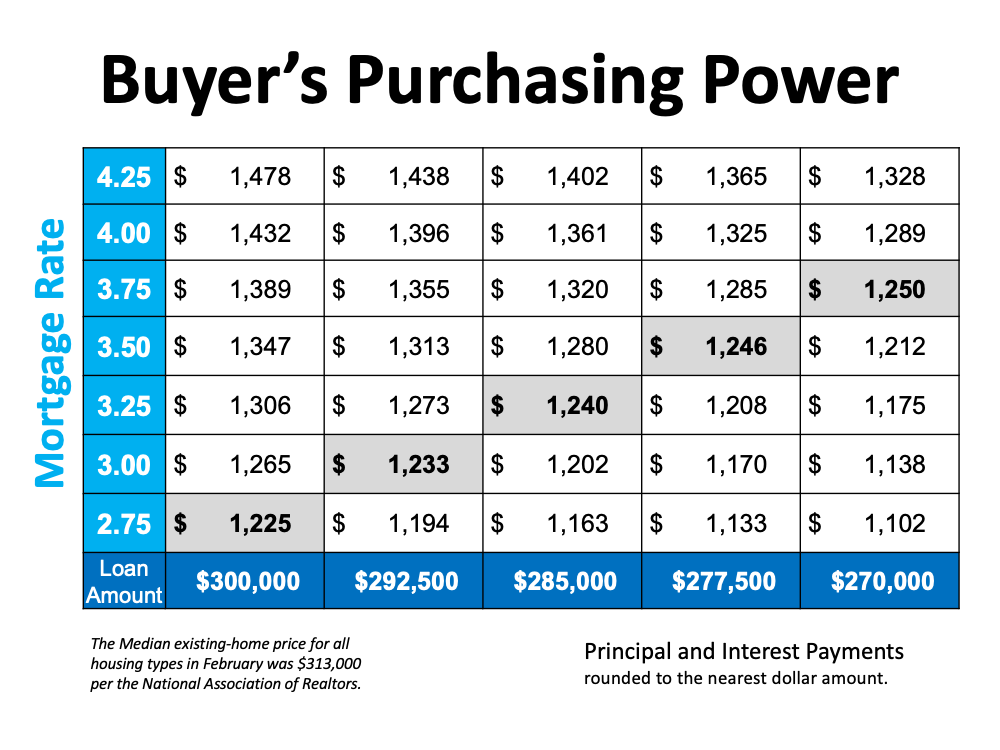
In addition to equity gains, today’s housing market affordability is powered by record-low mortgage rates, so moving at a time when you can get more for your money may be more realistic than you think.
Bottom Line
If you’re a millennial thinking about moving this year, you’re not alone. Let’s connect to shed light on the equity you have in your current home and the opportunities it can create.
Last year started off with a bang. Unemployment was under 4%, forecasters were giddy with their projections for the economy, and the residential housing market had the strongest January and February activity in over a decade.
Then came the announcement on March 11, 2020, from the World Health Organization declaring COVID-19 a worldwide pandemic. Two days later, the White House declared it a national emergency. Businesses and schools were forced to close, shelter-in-place mandates were enacted, and the economy came to a screeching halt. As a result, unemployment in this country skyrocketed to 14.9%.
A year later, the economy is recovering, and the U.S. has regained more than half of the jobs that were originally lost. However, some businesses are still closed, and many schools are still struggling to reopen. Despite the past and current challenges, there is one industry that’s proven to be a tailwind helping to counter all of these headwinds to our economy. That industry is housing. Remarkably, the residential real estate market (including existing homes and new construction) has flourished over the last twelve months. Sales are up, prices are appreciating, and more new homes are being built. The housing market has been a pillar of strength in an otherwise slowly recovering economy.
How does the real estate market help the economy?
At the beginning of the pandemic, the National Association of Realtors (NAR) released a report that explained:
“Real estate has been, and remains, the foundation of wealth building for the middle class and a critical link in the flow of goods, services, and income for millions of Americans. Accounting for nearly 18% of the GDP, real estate is clearly a major driver of the U.S. economy.”
The report calculated the total economic impact of real estate-related industries on the economy as well as the expenditures that resulted from a single home sale. At a national level, their research revealed that a single newly constructed home had an economic impact of $88,416.
Here’s how it breaks down:The map below shows the impact by state:The impact of an existing home sale is approximately $40,000.
Real estate has done more for our economic wellbeing than virtually any other industry over the last year. It’s been a beacon of light during a very challenging time in our nation’s history.
Bottom Line
Whether you’re buying a newly constructed home or one that already exists, you’re making a positive economic impact in your local community – and it’s a step toward your homeownership goals as well.